Physiotherapy for Older People at Home

image 3

You've found the right people.

We are chartered physiotherapists who specialise in older people, and we come to you. Most of our work is with people in their eighties and nineties — after a fall, an operation, an illness, or a slow decline that’s been going on longer than anyone quite noticed.

No referral, no waiting list, and often at the door within 48 hours of a hospital discharge.

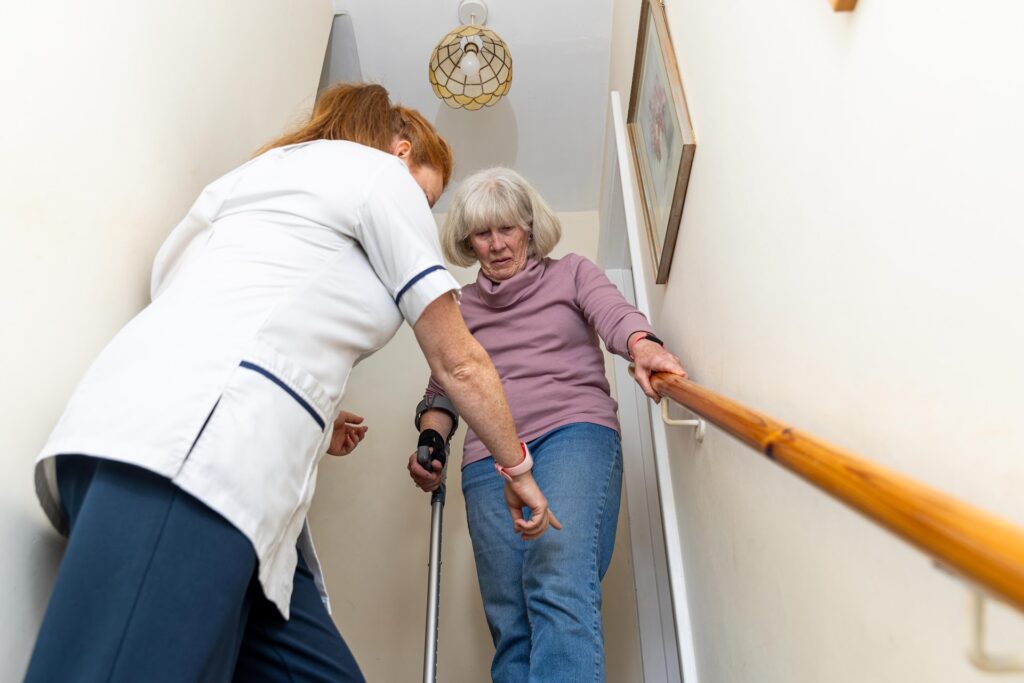
Most people find us because someone in the family noticed first. That she’s stopped going upstairs. That she’s holding the furniture. That she hasn’t been out since the fall — not because of the injury, but because she’s frightened of another one. Often the hospital has discharged her, the six weeks of NHS support have ended, and everyone has moved on except the person watching it happen.

You don’t need to wait for a crisis, and you don’t need permission.

Not sure whether we can help? Speak to Michelle or Christina — our coordinators are community physiotherapists, not call handlers. Tell us what’s actually happening and we’ll give you an honest answer, including if the answer is that we
can’t.

0800 772 0542 · Or send us a message


Conditions we commonly see

Most people we visit have several of these at once. That combination is usually the point —it’s what makes managing at home hard.

If none of these quite describes it, it’s still worth a conversation. Sometimes there’s no single diagnosis and plenty that can be improved.

If you require physio in a care home, find out more on our care home physio service here.

image 5 copy
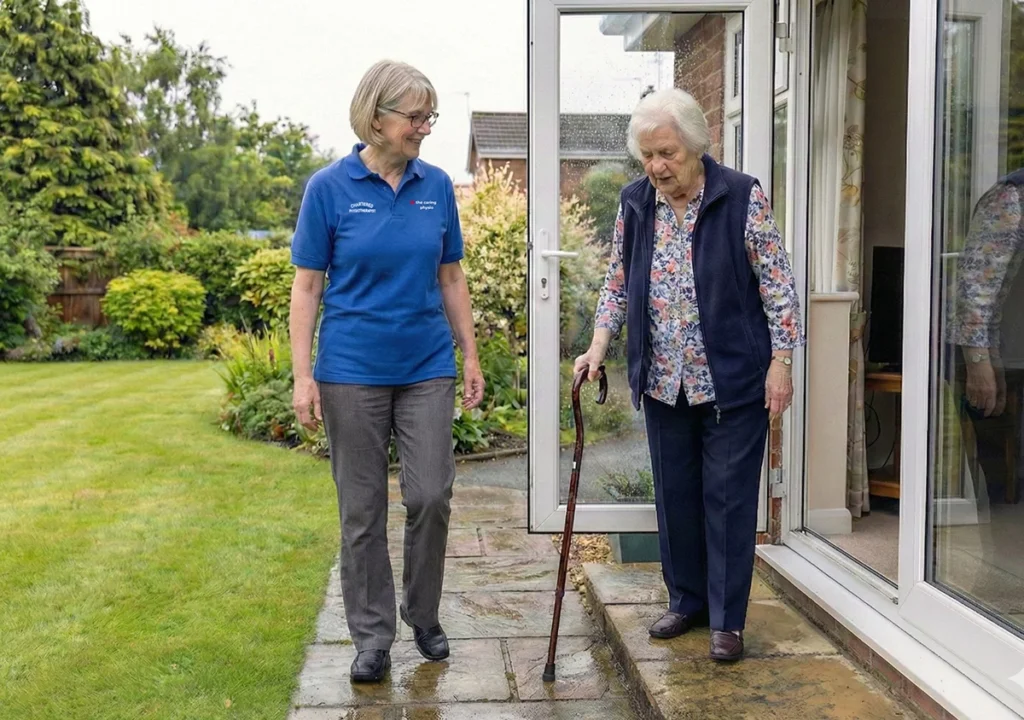
Live in rehab care physiotherpay walking lady outside into garden with stick

If you've been told there's no rehabilitation potential

It’s one of the most common things families tell us, usually with some resignation. That she’s too old. That there’s no rehab potential. That nothing more can be done.

Sometimes that’s an honest clinical judgement. Often it means someone won’t return to exactly how they were — which may well be true, and isn’t the same thing at all.

Muscle responds to training at any age. The capacity to build strength doesn’t appear to be lost in very old age, and there is good evidence of measurable gains in people in their eighties and nineties. What changes is how a programme has to be designed and supported, not whether it works.

We’ll assess and tell you honestly what we think is achievable — including, sometimes, that it’s very little.

If she won't engage, that's what we're good at

Families often tell us this part with some embarrassment. That their mother won’t do the exercises. That she’s given up. That she was short with the last physiotherapist and hasn’t been the same since. That it’s hard to watch someone who was capable and independent become someone who needs help to stand up.

None of that is unusual, and none of it means we can’t help. It’s most of what we do.

Low mood is common in older people and often missed. Memory and planning change with age, so someone can want to do their exercises, understand why they matter, and still not be able to organise themselves into starting. Apathy looksexactly like refusal, and is usually neither stubbornness nor giving up.

We know how to work with that, and mostly it means designing around it rather than pushing through it. Fewer exercises, in the same order, every day. One instruction at a time, never two. Attached to something that already happens — after breakfast, before the news — rather than added to the day as a new event. Cues left where the activity happens, not on a sheet in a drawer. And someone else carrying the remembering, which is usually the family or the carer, and is the single biggest predictor of whether a programme continues.

live in rehab will ferguson garden wheelchair

We explain what we’re doing and why — to your mother, not over her head. Where low mood looks like part of the picture, we’ll say so and suggest you raise it with her GP.

We’ll also be straight with you about what we’re seeing. Being gentle and being honest aren’t in conflict.

Exercises designed for your home, that actually get done

Most physiotherapy exercise apps are built around a gym. The demonstrator is on a mat, on the floor, in leggings. To an eighty-five-year-old that image says one thing: this is not for me.


Most home exercise programmes are handed over and never done. The usual explanation is that the patient wasn’t motivated. We think the programme is more often at fault: written for someone else, in someone else’s home, at a level nobody checked.

So we built our own, around three decisions.

Filmed Where You'll Do Them

live in rehab walking frame practice at home 1

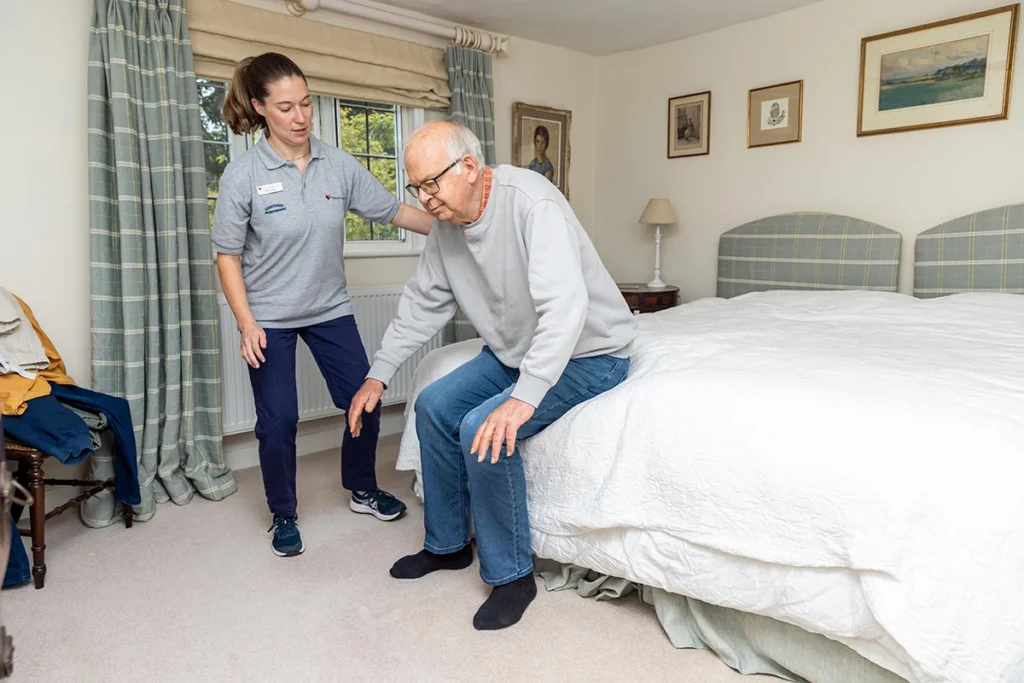
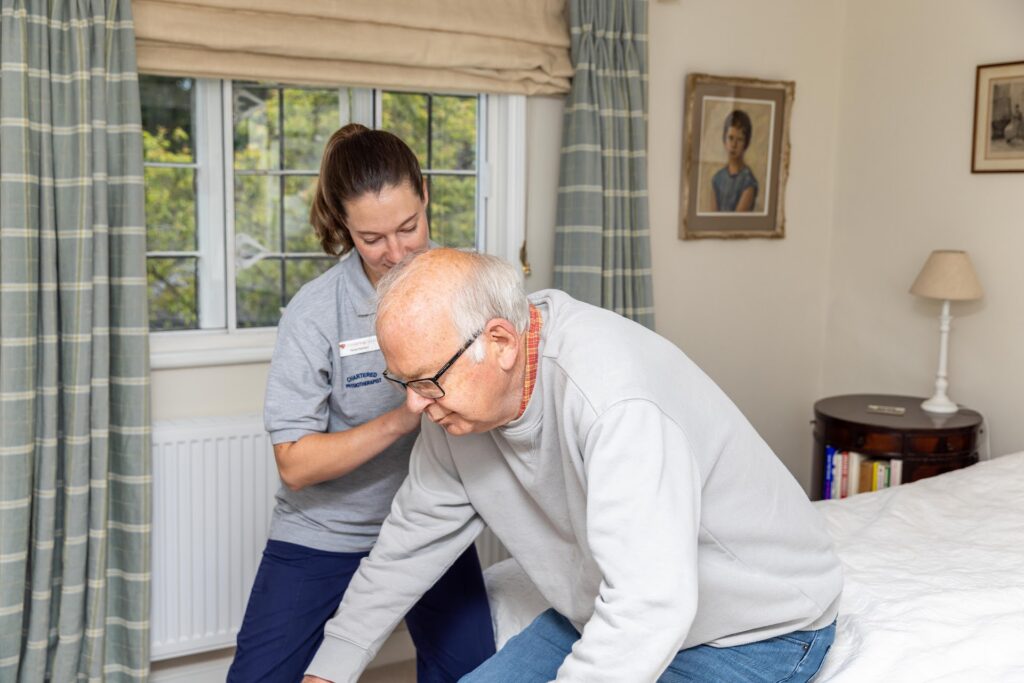
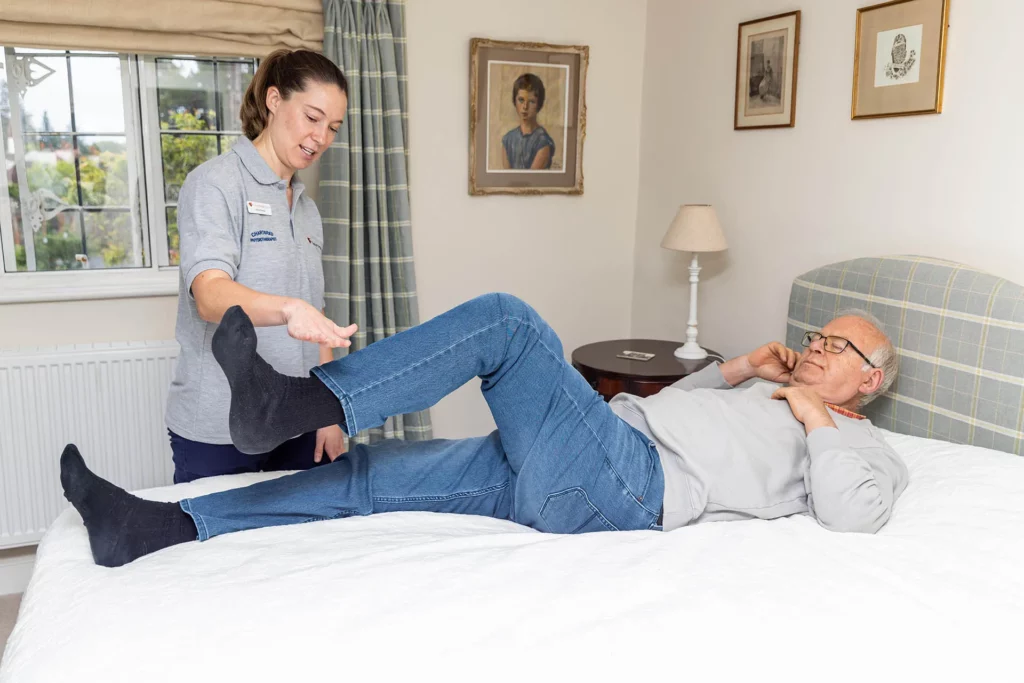
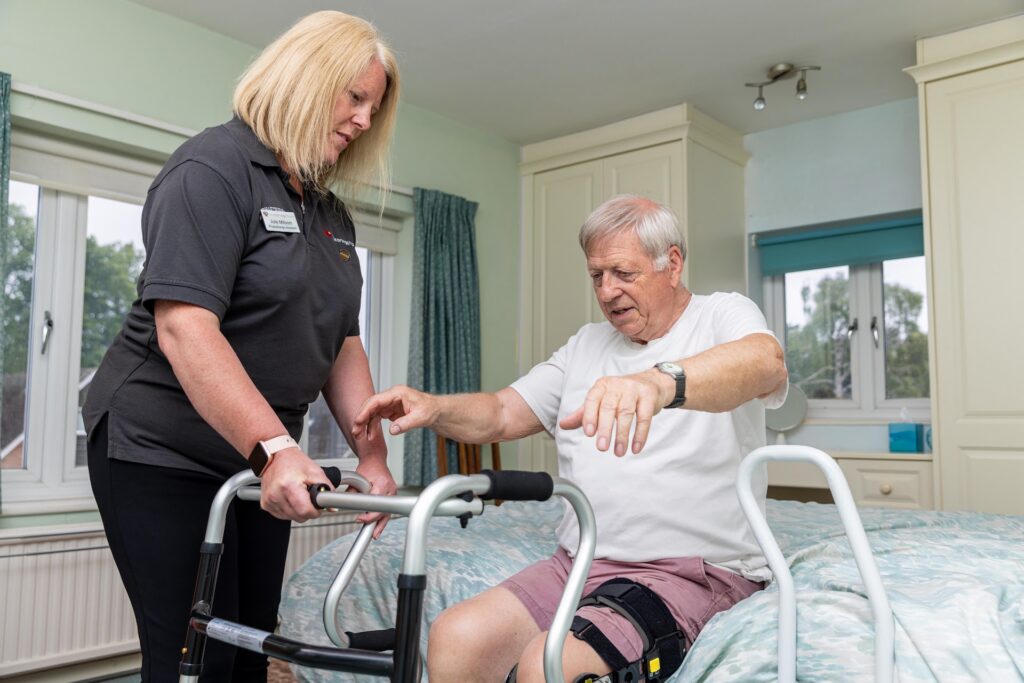
Every exercise is demonstrated in the place it will actually happen — sitting on the edge of the bed, in the armchair, holding the kitchen worktop. Nobody is asked to get down onto the floor. When the person on screen is in a room like yours, doing it looks possible rather than absurd.

On Screen Or On Paper

image 5 copy

The programme sits on a phone or tablet, and prints large if that’s easier. No app to download, no password to remember, no small text to squint at. Whatever gets it done is the right format — and a sheet on the arm of the chair beats an app nobody opens.

It Changes As You Do

Caring Physio physiotherapist supporting an older woman as she bends to pick up a ball from the floor during a balance exercise at home

Your physiotherapist updates the programme between visits, so it keeps pace with what you can manage rather than sitting still. Exercises get harder as you get stronger, and come off the list when they’ve done their job. It’s a live plan, not a leaflet handed over once.

Why we train everyone else too

Teaching The Purpose

The Caring Physio web 48 1

Every exercise on the programme has a reason behind it, and we make sure the people around you know what it is. A carer who understands that a sit-to-stand is building the strength to get off a toilet unaided will protect that exercise. One who thinks it’s just a stretch won’t.

How Much Help

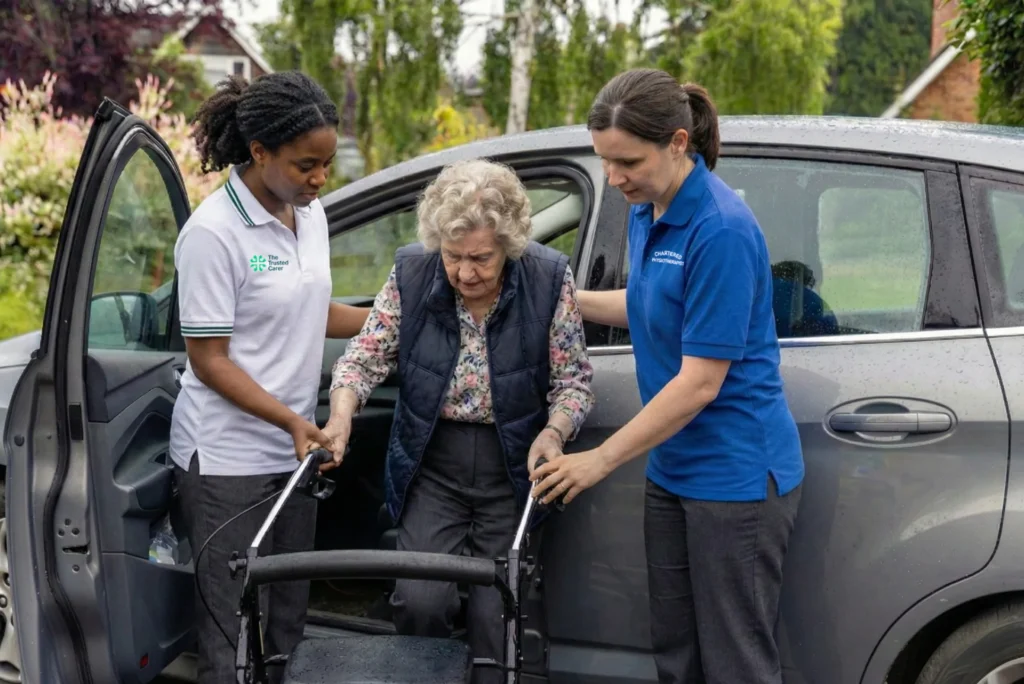
live in rehab carer physiotherapist helping from car

We spend three sessions teaching someone to stand from their armchair under their own power — leaning forward far enough to get their weight over their feet, which is frightening at first and takes real practice. Then a carer takes both hands and lifts them. Kindly, quickly, with the best intentions. That undoes the work.

When To Step Back

The Caring Physio web 80

Nobody did anything wrong in that example; nobody had explained why it mattered. So we show carers and family exactly where to stand, what to say, and when to wait — including the uncomfortable pause while someone works out how to do it themselves. That’s how the other fifty contacts start pulling in the same direction.

Short, Functional and Fun.

Three rules govern every programme we write.

Short. Four exercises done every day beats twelve done twice. Long programmes get abandoned, and an abandoned programme achieves nothing.

Functional. We practise the things that actually matter — standing up from the chair you sit in, managing your own stairs, getting to your own bathroom at night. Not abstract movements that have to be translated into real life later.

Fun. Or at least tolerable, and preferably social. Rehabilitation that feels like a chore stops. Rehabilitation built into something you already do, with someone you like, continues.

The Caring Physio web 31

Supporting Family

With approved consent, we provide excellent communication between us and your family so they feel reassured that you are getting the best opportunity to improve your quality of your life. We will give as much time as we can on the phone, by text or whats app and via email to make sure you are aware of your relatives progress.