Live-in Rehabilitation Care

Regain Independence With Clinician-led Rehabilitation at Home

Whether your loved one is recovering after a hospital stay, a fall, surgery or living with a complex neurological condition, our live-in rehabilitation service is designed to help them recover safely in the place they know best, their own home.
Unlike traditional live-in care, our service combines expert physiotherapy, occupational therapy and dedicated live-in carers into one coordinated rehabilitation team. Every rehabilitation plan is created and overseen by registered clinicians, ensuring every exercise, every transfer and every daily activity works towards improving independence, confidence and quality of life.

Delivered in partnership with The Trusted Carer, our integrated approach allows rehabilitation to happen throughout the day, not just during a weekly therapy appointment.

Whether you’re looking to avoid a care home placement, support a safe hospital discharge or help someone regain mobility following illness or injury, we’re here to help.

Call 0800 772 0542 today to discuss how live-in rehabilitation could support your loved one.

What Is Live-in Rehabilitation Care?

Live-in rehabilitation care combines professional live-in care with expert physiotherapy and occupational therapy to support recovery at home.

Rather than simply assisting with daily tasks, rehabilitation focuses on helping people regain strength, mobility and independence wherever possible.

Every care package begins with a comprehensive assessment carried out by our physiotherapist and occupational therapy team. Together they develop a personalised rehabilitation programme based on each person’s goals, mobility, medical history and home environment.

That rehabilitation programme is then delivered every day by a specially trained live-in carer, with ongoing clinical supervision from our physiotherapists.

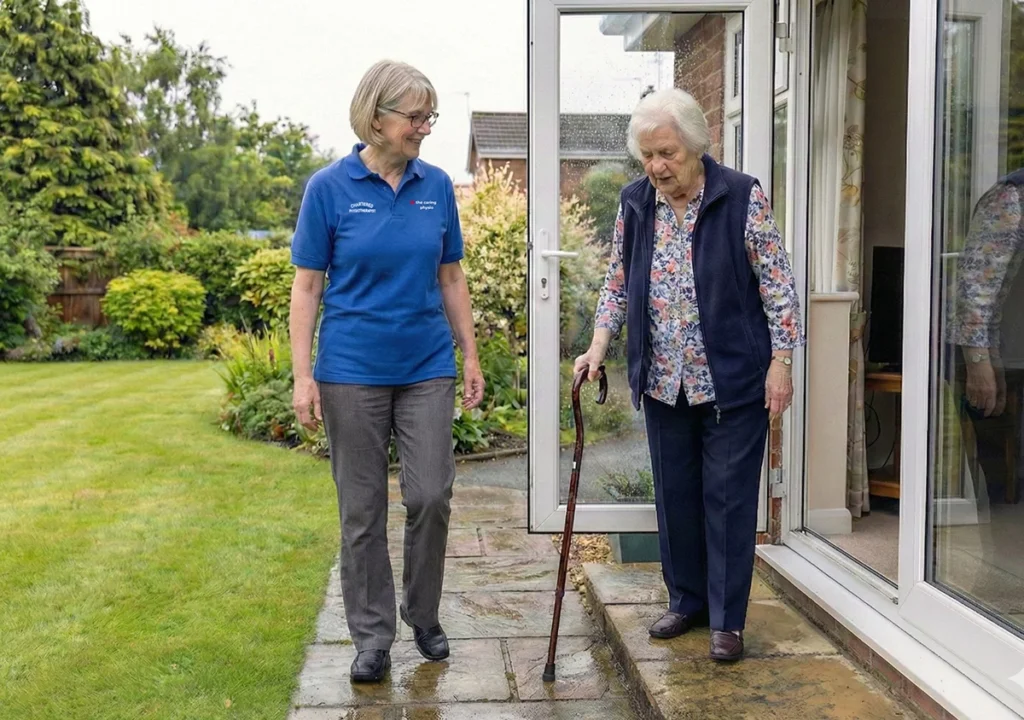
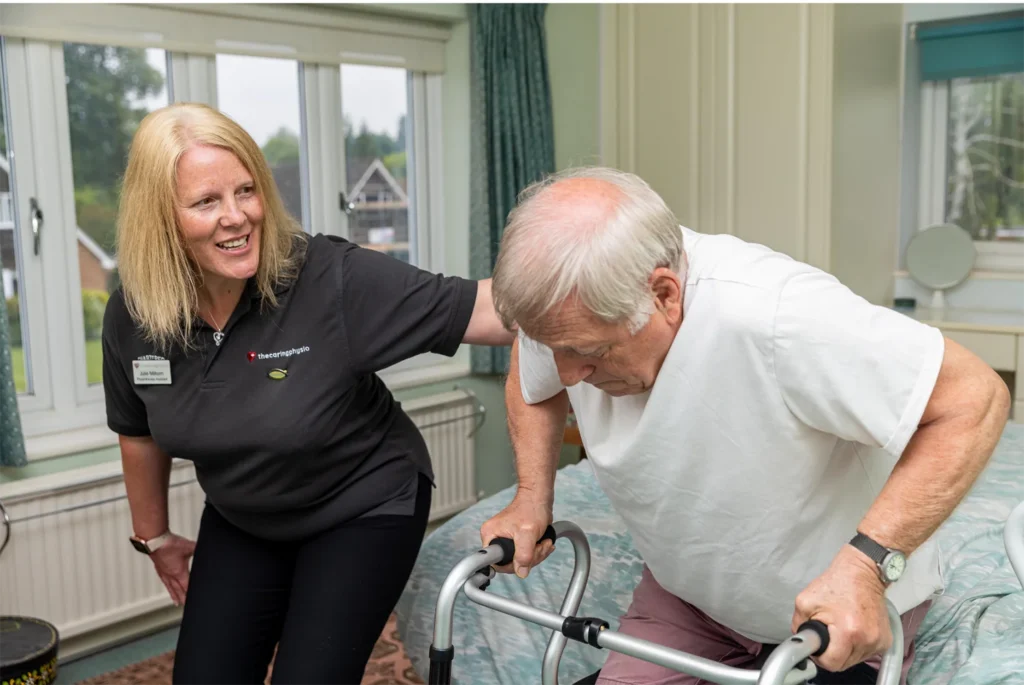
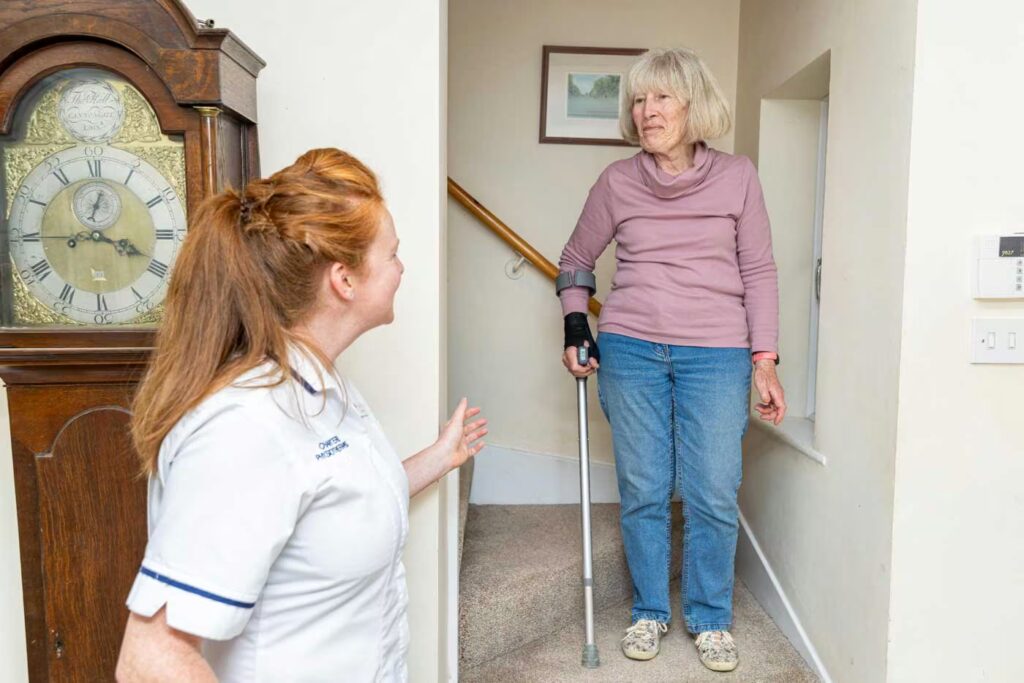
This means rehabilitation becomes part of everyday life, from getting out of bed and preparing meals to walking safely around the home and building confidence outdoors.
live in rehab walking frame practice at home 1

Why Choose Live-in Rehabilitation Instead of Traditional Live-in Care?
Traditional live-in care is invaluable for supporting people with everyday living, but its primary focus is maintaining safety and providing personal care.
Live-in rehabilitation has a different objective.
Our goal is to help people recover as much independence as possible.
Instead of simply completing tasks for someone, rehabilitation encourages people to do as much as they safely can themselves. Every movement becomes an opportunity to rebuild strength, improve balance and increase confidence.
This approach is often described as enabling care, helping people regain lost abilities rather than becoming increasingly dependent on support.
For many people recovering from surgery, illness or injury, daily rehabilitation can make a significant difference to long-term mobility and quality of life.
live in rehab carer physiotherapist hand exercises

How Our Clinician-led Rehabilitation Works

One of the biggest differences between our service and many traditional live-in care providers is that every rehabilitation programme is led by registered healthcare professionals.
Before care begins, our physiotherapist and occupational therapist complete a detailed assessment, either in hospital or at home. This assessment looks beyond immediate care needs to understand what recovery could realistically look like.
We create an individual rehabilitation programme covering:
Your live-in carer is then trained to deliver this programme safely throughout each day.
Our physiotherapist continues to review progress regularly, adapting the rehabilitation programme as recovery progresses and introducing more advanced rehabilitation where appropriate.
Rather than rehabilitation happening for one hour each week, it becomes part of everyday life.

Why Daily Rehabilitation Matters

Recovery doesn’t only happen during physiotherapy appointments.
The greatest improvements often come from consistent movement and repetition throughout the day.
A person recovering from a hip fracture, stroke or prolonged hospital stay may perform hundreds of small movements every day. Standing from a chair, walking to the kitchen, washing, dressing and climbing stairs all contribute towards rehabilitation when performed safely and correctly.
Without clinical guidance, those same opportunities can easily become missed opportunities.
That’s why our rehabilitation plans are designed to integrate therapy naturally into everyday routines.
Instead of exercising once a week and remaining inactive for the following six days, rehabilitation becomes continuous, helping people build confidence and maintain progress between physiotherapy visits.

Rehabilitation After Hospital Discharge

Returning home after a hospital stay can feel overwhelming for both patients and families.
Many people are medically ready to leave hospital but experience delays because appropriate care, rehabilitation or equipment has not yet been arranged.
Our team works alongside hospital discharge teams to make that transition as smooth as possible.
Where appropriate, we can assess the home before discharge, recommend suitable equipment and develop a rehabilitation plan that allows recovery to continue safely at home.
We always encourage NHS or local authority funding where available. However, if delays in equipment or services are preventing discharge, we can often arrange temporary private solutions to support an earlier return home while longer-term arrangements are made.
Recovering in familiar surroundings often allows people to return to normal routines more quickly while remaining close to family, friends and everything that makes home feel comfortable.
live in rehab will ferguson garden wheelchair

Case Study

Working with the discharge team, we got him home from his hospital in Hereford to his own home in Gloucestershire within six days.
“When Dad fell and broke his hip, I was on the other side of the world in Australia — one of the most frightening moments of my life. From the first phone call to the moment he came back through his own front door, the team were extraordinary. He was home just six days after his operation. A live-in carer moved in, working hand in hand with the occupational therapists, and every day without fail Dad does his physio and his exercises. He's been out walking in the village, out for coffees — out living. At his last check-up, the doctors couldn't believe how well he was doing. You didn't just bring my dad home. You're giving him his life back.”
— E.T., Gloucestershire, daughter of a live-in rehab client (Google review, July 2026)
live in rehab carer physiotherapist helping from car.webp

The Difference Clinician-led Care Can Make

Having a physiotherapist and occupational therapist leading your rehabilitation provides far more than exercise programmes.
It means your rehabilitation is continuously reviewed by professionals trained to assess movement, recognise changes in physical function and adapt treatment safely.
Our clinicians carry out:
They also recognise early signs that someone’s condition may be changing, allowing appropriate action to be taken promptly where needed.
If hospital treatment becomes necessary, we will always recommend and arrange appropriate medical care.
Our priority is always safe, evidence-based rehabilitation delivered in the person’s best interests.

Helping People Return Home

One gentleman came to us following a fractured hip and hip replacement. During his hospital stay he experienced post-operative delirium alongside dementia, leaving him confused, distressed and reluctant to engage with rehabilitation.
Working closely with the hospital discharge team, we developed a personalised rehabilitation plan and arranged the specialist equipment needed to support his safe return home.
Within days of returning to familiar surroundings his confidence began to improve.
The floor-level profiling bed, specialist seating and carefully planned rehabilitation programme reduced his falls risk while allowing him to continue rebuilding strength safely.
Just two days after arriving home, he was back in his own garden feeding his ducks, something that had become an important personal rehabilitation goal.
Stories like this remind us that successful rehabilitation isn’t simply measured by walking further or lifting more. It’s about helping people return to the activities, routines and independence that matter most to them.

Who Can Benefit from Live-in Rehabilitation?

Every rehabilitation journey is different, which is why we don’t believe in a one-size-fits-all approach. Our clinicians assess each person’s physical abilities, medical history, goals and home environment before recommending the most appropriate rehabilitation programme.
We support adults recovering from a wide range of conditions, including:
Having a diagnosis such as dementia does not automatically mean rehabilitation is no longer appropriate. Many people continue to make meaningful improvements in mobility, confidence and quality of life with the right clinical support.
Live in rehab care physiotherpay walking lady outside into garden with stick

The Right Equipment to Support Recovery

Working with the discharge team, we got him home from his hospital in Hereford to his own home in Gloucestershire within six days.

Our physiotherapists and occupational therapists assess every individual’s needs before recommending equipment. This may include specialist seating, profiling beds, mobility aids or rehabilitation equipment that encourages safe movement and independence.
Rather than relying on equipment permanently, our aim is to reduce dependence wherever possible. As strength, balance and mobility improve, equipment can often be stepped down as part of the rehabilitation journey.

Why Families Choose The Caring Physio

Choosing rehabilitation for a loved one is a significant decision. Families want reassurance that they are receiving expert advice, safe care and honest guidance.
Our integrated rehabilitation model offers several important advantages.

Rehabilitation Led by Registered Clinicians

Every rehabilitation programme is designed and overseen by chartered physiotherapists working alongside occupational therapists, ensuring decisions are based on clinical evidence and each individual's needs.

Personalised Rehabilitation Plans

No two people recover in exactly the same way. Every programme is tailored around personal goals, medical history, mobility levels and the home environment.

Daily Rehabilitation

Unlike weekly therapy appointments, rehabilitation is incorporated throughout each day, helping maintain consistency and encouraging steady progress.

One Coordinated Team

Families, hospital teams and case managers work with one integrated service rather than multiple providers, making communication clearer and rehabilitation more coordinated.

Honest Advice

If we believe live-in rehabilitation is not the most appropriate option, we will tell you. Our recommendations are always based on what is safest and most beneficial for the individual.

Case Study

“When Dad fell and broke his hip, I was on the other side of the world in Australia — one of the most frightening moments of my life. From the first phone call to the moment he came back through his own front door, the team were extraordinary. He was home just six days after his operation. A live-in carer moved in, working hand in hand with the occupational therapists, and every day without fail Dad does his physio and his exercises. He's been out walking in the village, out for coffees — out living. At his last check-up, the doctors couldn't believe how well he was doing. You didn't just bring my dad home. You're giving him his life back.”
— E.T., Gloucestershire, daughter of a live-in rehab client (Google review, July 2026)

Areas We Cover

Our home physiotherapy (link to homepage) services operate across 17 counties.
Live-in rehabilitation care, delivered in partnership with The Trusted Carer and Sunday Care Therapy, is currently available across:

If you live just outside these areas, please contact us. Depending on your circumstances, we may still be able to help or advise on the most appropriate rehabilitation options.

Funding Live-in Rehabilitation Care

Funding rehabilitation can feel confusing, particularly following an unexpected hospital admission.

Depending on individual circumstances, financial support may be available through:

We encourage families to explore NHS and Local Authority funding wherever appropriate and will provide honest guidance about the options available. The value of your home is not counted in the local authority means test while you are living in it. If delays to funding or equipment are affecting recovery, temporary private arrangements may help avoid unnecessary delays while longer-term funding is being finalised.

Rehabilitation for Case Managers

We regularly work alongside case managers supporting clients with complex rehabilitation needs following serious injury or neurological conditions.
Our clinician-led approach provides comprehensive rehabilitation planning alongside the documentation often required within case management, including rehabilitation goals, progress reports, moving and handling assessments and risk assessments.
By delivering physiotherapy, occupational therapy and live-in rehabilitation through one coordinated team, communication becomes simpler and rehabilitation remains focused on agreed clinical goals.

Frequently Asked Questions

Yes. We offer a free initial assessment to determine whether live-in rehabilitation is the right option for your loved one. We’ll provide honest clinical advice with no obligation to proceed.
Traditional live-in care focuses primarily on supporting day-to-day living. Live-in rehabilitation combines that support with structured physiotherapy and occupational therapy to help improve strength, mobility and independence.
Yes. Where appropriate, our clinicians can assess patients before discharge and work with hospital teams to help plan a safe return home.
This depends on individual circumstances, but we aim to begin the assessment process as quickly as possible to avoid unnecessary delays to recovery.
Every rehabilitation plan is developed by our physiotherapist and occupational therapist before being delivered by a trained live-in carer under ongoing clinical supervision.
Yes. Many people living with dementia can still benefit from rehabilitation that focuses on maintaining mobility, confidence, independence and quality of life.
Yes. Our clinicians assess equipment requirements and can recommend or arrange appropriate mobility and rehabilitation equipment where required.
There is no fixed timeframe. Some people require several weeks of intensive rehabilitation, while others benefit from longer-term support. Progress is reviewed regularly, and the rehabilitation plan is adjusted as recovery develops.
Yes. We regularly support case managers caring for clients with neurological conditions, brain injuries, spinal injuries and other complex rehabilitation needs.
Live-in rehabilitation is available across London, Berkshire, Buckinghamshire, Gloucestershire, Hampshire, Hertfordshire, Oxfordshire and Surrey, with home physiotherapy services covering a wider geographical area.

Speak to Our Team About Live-in Rehabilitation

Choosing the right rehabilitation service can have a lasting impact on recovery, independence and quality of life.
If your loved one is preparing to leave hospital, recovering after surgery or requires intensive rehabilitation at home, our experienced team can help you understand the options available.
We’ll explain how our clinician-led rehabilitation works, discuss funding where appropriate and provide honest advice about whether live-in rehabilitation is the right choice.
Call 0800 772 0542 or contact The Caring Physio today to arrange your free initial assessment.