Physiotherapy for Dementia: Specialist Home Visits Across England

Compassionate, expert home-visit physiotherapy focused on mobility, comfort and quality of life. HCPC-registered physiotherapists. No GP referral needed.
image 3

Physiotherapy for Dementia

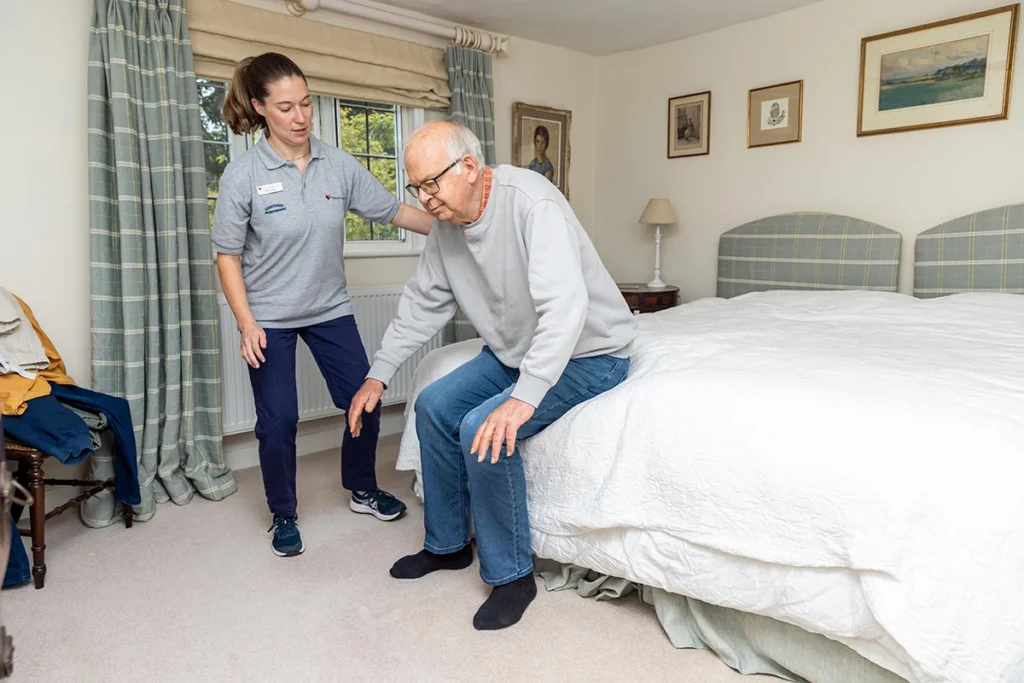
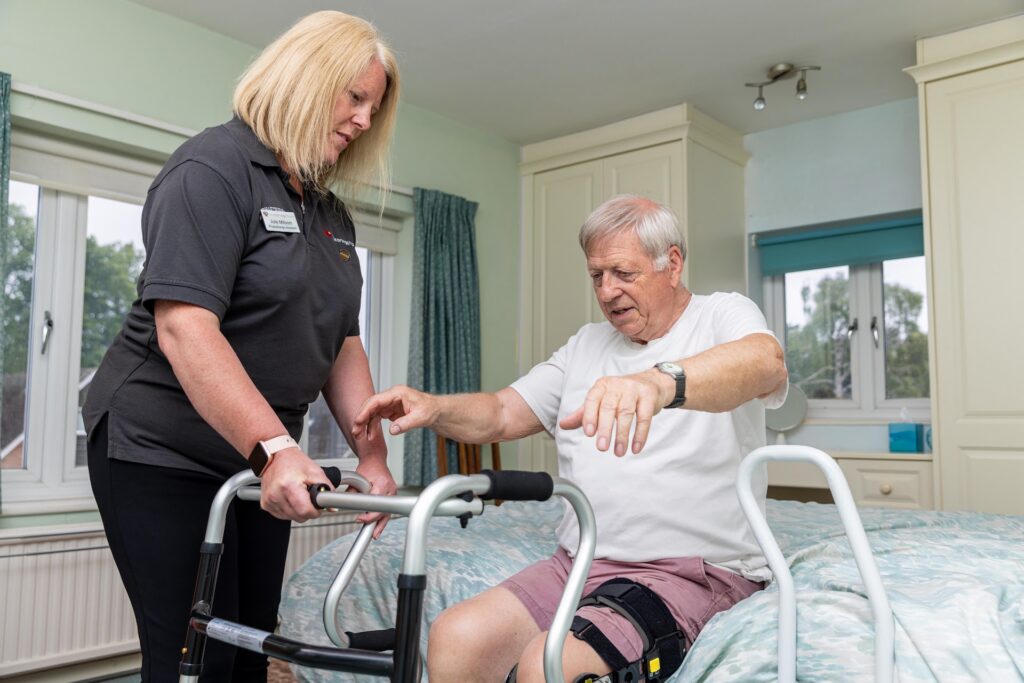
Physiotherapy for dementia can make a real difference for someone living with the condition. It will not change the diagnosis, but expert, dementia-experienced physiotherapy delivered at home helps a person stay mobile, comfortable and safe. It reduces falls, prevents painful complications, and protects their dignity at every stage of the condition. Here is how we approach it.
Watching a parent or loved one navigate the progression of dementia is an incredibly emotional and challenging journey for any family. When cognitive decline is compounded by physical setbacks, such as a sudden loss of mobility, a fall, or a hospital admission for a fractured hip, the situation can feel overwhelming. You want them to be safe, comfortable, and treated with the utmost dignity.
At The Caring Physio, we are dementia rehabilitation specialists. While many physiotherapy providers focus primarily on orthopaedic recovery, our clinical team has developed deep expertise in the neurological, cognitive and physical movement symptoms that come with dementia. Because these physical symptoms often mirror those seen in Parkinson’s disease, we draw heavily on our specialist Neurological Physiotherapy techniques to manage rigidity and fall risks.

Our Approach to Dementia Physiotherapy

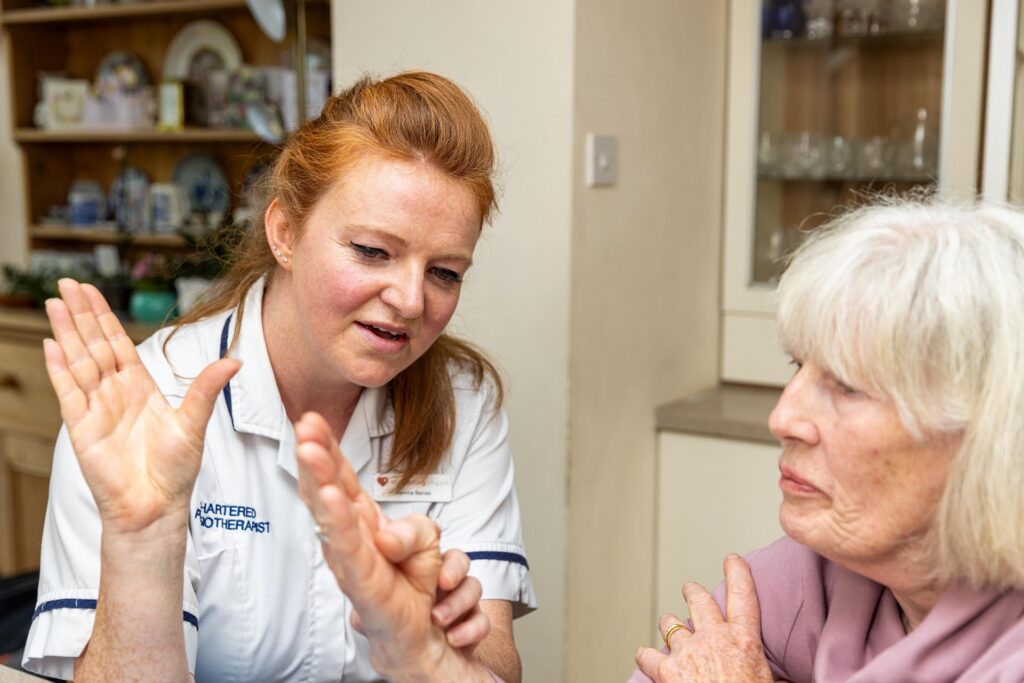
A crucial part of our approach is understanding how dementia alters communication and motivation. We look closely at which type of dementia a patient has, and which part of the brain is affected, to adapt our strategy accordingly.
Patients frequently present with profound apathy, which is often a symptom of damage to the frontal lobe. The brain struggles to process the “reward” versus the “effort” of a task. When a patient repeatedly says no to moving, it is rarely stubbornness; it is a neurological barrier. We find alternative, meaningful ways to motivate, rather than forcing an unappealing task.
Processing speeds are often significantly delayed too, so a multi-stage command can become overwhelming. We set patients up for success, never failure. Our physiotherapists are trained to:
Because presentation can change so drastically across the day, our core philosophy is that we never write a patient off. We always seek the reason behind the behaviour, and we adapt our strategy to a person whose abilities fluctuate hour to hour. We provide vital education to family members, care staff and live-in carers to help them anticipate these shifts, keeping the patient safe, supported and understood.
image 5 copy

What Does Physiotherapy for Dementia Include?

Our physiotherapy for dementia is entirely tailored to the individual’s current stage. We define success not just by getting someone back on their feet, but by maximising overall quality of life and comfort.
Physiotherapy for Dementia in Care Homes: Getting Moving Again
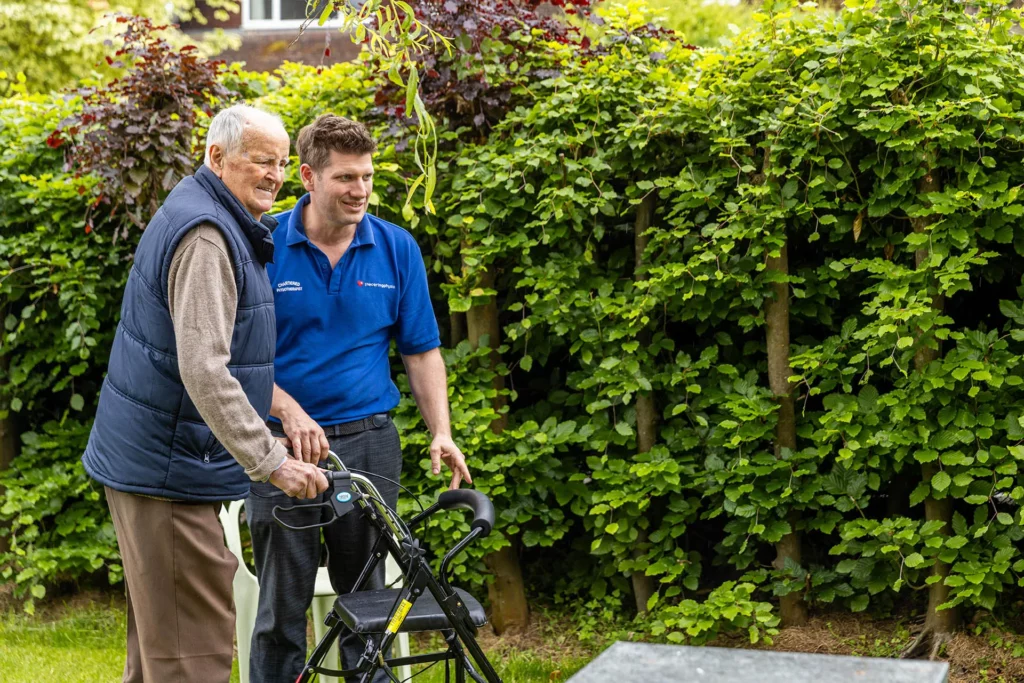
It is common for someone in residential care to simply stop walking after a minor infection, a change in environment, or the progression of their dementia. Left unaddressed, they quickly lose strength and independence. We work closely with care-home staff to gently reintroduce movement, rebuild muscle memory and restore confidence in walking. Learn more about our Physiotherapy in Care Homes service.
Post-Hospital Rehabilitation for Dementia: Coming Home Safely
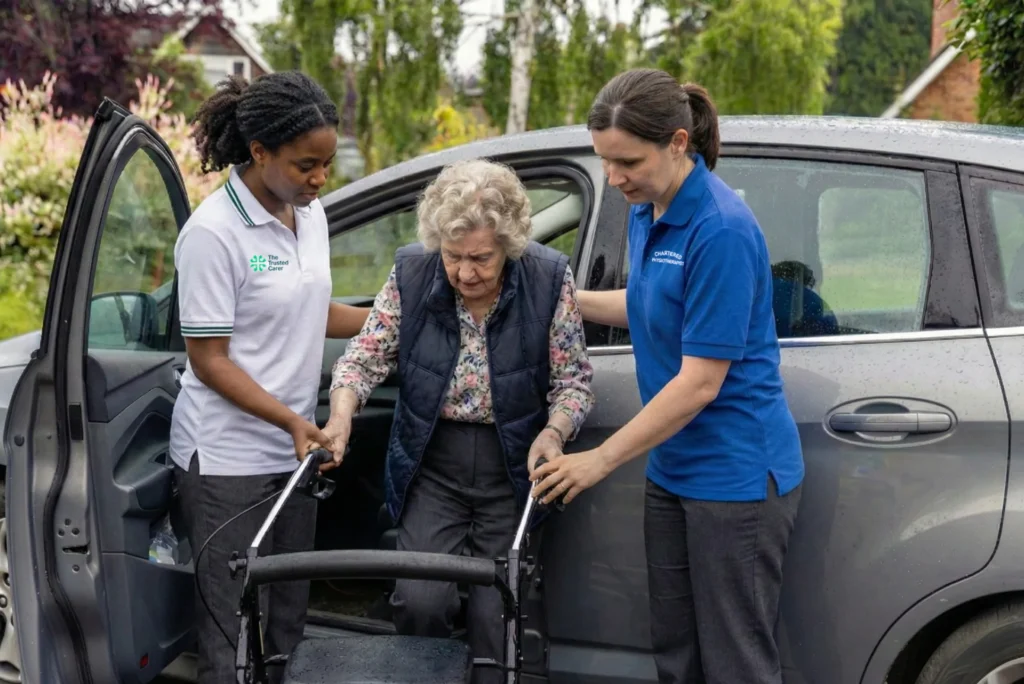
A spell in hospital is disorientating for someone with dementia, and time on a busy ward often means lost strength and confidence. There is rarely the staffing available for intensive, one-to-one rehabilitation in hospital. We step in straight after discharge with specialised, repetitive, gentle rehabilitation at home, helping people recover in familiar surroundings, whether after a fall, a repaired hip fracture or an illness.
We also help people return home after a stay in a care home. A temporary placement does not have to become permanent: with focused one-to-one physiotherapy to rebuild strength, balance and confidence, many people can get back to their own home. We work with families and carers to make that move safe.
Advanced Dementia Physiotherapy: Supporting Dignity and Independence
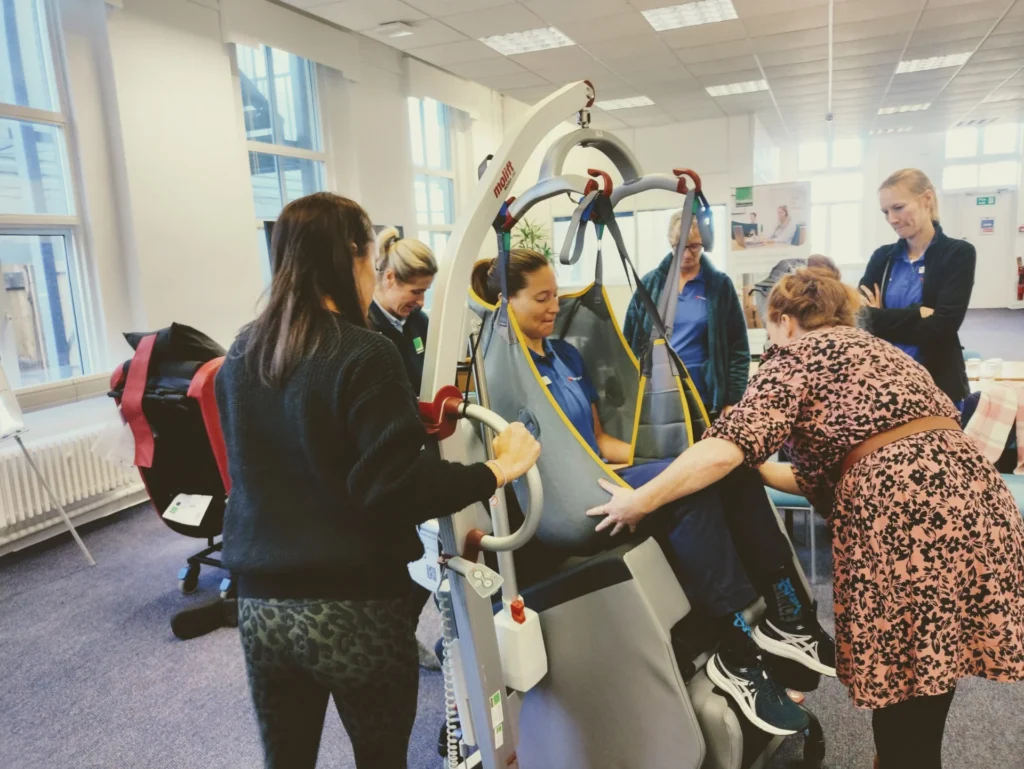
A common misconception is that physiotherapy is only for people who can still stand or walk. For someone with advanced dementia, rehabilitation is also about maintaining dignity and autonomy. If a person now needs two carers for washing, dressing or hoisting, our goal shifts to optimising how that care is delivered and finding ways for them to participate:
Advanced Dementia: Seating Assessments and 24-Hour Postural Care
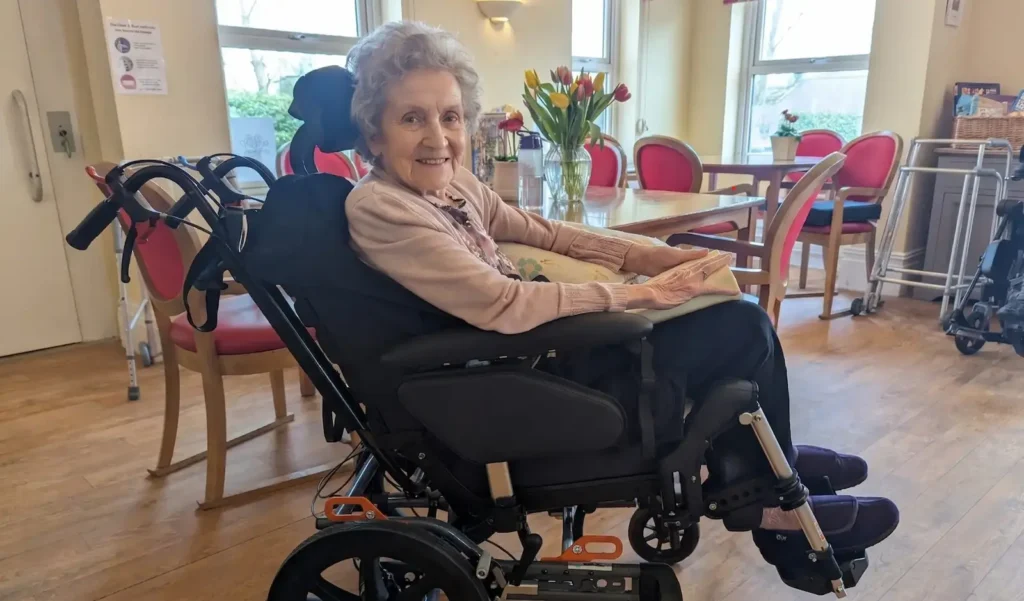
In later stages, a patient may lose mobility entirely and need full-time care in a bed or chair. Our role evolves to focus on comfort, pain prevention and dignity. We carry out specialist seating and postural assessments to make sure a person is properly supported and comfortable, and we provide comprehensive 24-hour postural care. We work hand in hand with equipment providers who understand 24-hour postural support, to protect joints, prevent contractures, and keep your loved one as pain-free as possible.
For families requiring intensive, round-the-clock support, we offer integrated Live-in Rehabilitation, blending daily care with therapy-led rehabilitation. This is particularly valuable for patients who need continuous, rehab-minded support to remain safely at home.

Physiotherapy for Dementia When Patients Have Been Written Off

“They told us there was no rehab potential.”
Families often come to us after being told, on a ward or by a stretched community team, that their relative has no rehabilitation potential. With dementia this happens all too easily: if someone cannot follow a multi-step instruction or does not respond in the first few seconds, it is wrongly assumed they cannot engage at all.
We start from a different place. We never write a patient off, and we give the one thing a stretched system so often cannot: time. An unhurried assessment, specialist communication techniques, and consistent one-to-one sessions frequently reveal potential that was missed under pressure. We are always honest about what is realistic, but everyone deserves a proper, patient assessment before any decision is made.
image 4

Trusted Dementia Physiotherapy Provider: Recognised by Local Support Networks

We are proud to be a recognised and trusted physiotherapy provider on the Dementia Oxfordshire website. Our roots in specialist dementia care were established supporting families and care homes in Oxfordshire, and we now bring the same highly specialised, compassionate care to families across Berkshire, East Sussex, Cambridgeshire, London and beyond.

Meet Your Dementia Physiotherapist

Our specialist dementia physiotherapy service is led by our Founder and Clinical Director, Will Ferguson. As a highly experienced dementia specialist and rehab care trainer, Will has spent years working directly within care homes, training care staff to safely manage complex dementia presentations. His clinical approach is fundamentally rooted in preserving a patient’s dignity, maximising their independence, and ensuring that every individual feels understood and supported, no matter how their condition fluctuates. Every member of our team is HCPC-registered and a member of the Chartered Society of Physiotherapy.

Falls Prevention for People with Dementia: Reducing Risk at Home

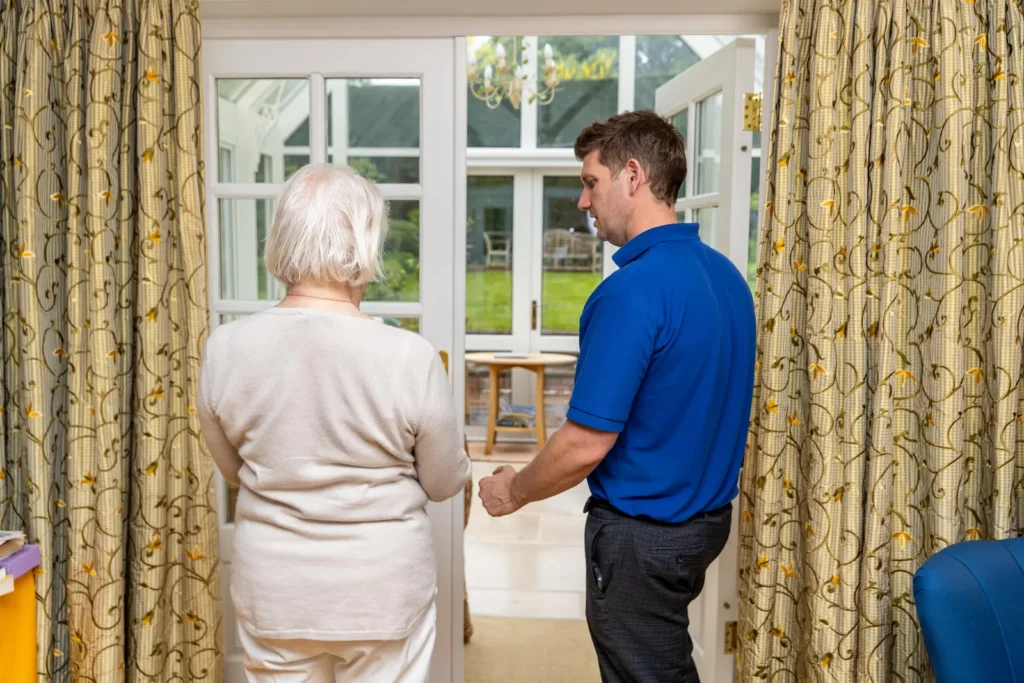
Falls are one of the most serious risks for a person living with dementia. Reduced spatial awareness, poor proprioception, medication side effects and fluctuating alertness all increase the danger. Our physiotherapists carry out comprehensive Falls Prevention assessments for people with dementia at home, identifying specific triggers and putting practical, realistic strategies in place.
We also address sundowning and evening agitation, which can dramatically increase fall risk. Someone with dementia and Parkinson’s may be stiff and slow in the morning but become agitated and unexpectedly fast-moving in the evening. We explain these daily fluctuations and train family and carers to anticipate and manage them safely.

Areas We Cover for Dementia Physiotherapy

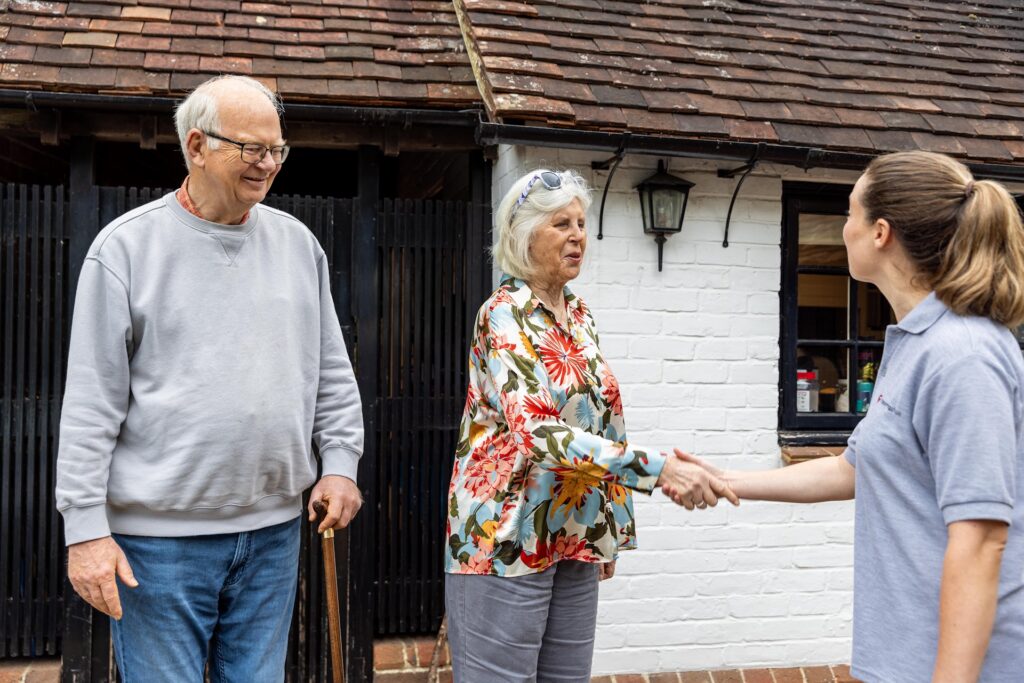
We provide specialist physiotherapy for dementia as home visits across England. No GP referral is needed and we come to you, whether you are at home, in a care home or in supported living. We currently serve families across:
If your area is not listed, please get in touch. We are often able to accommodate enquiries in neighbouring areas and our coverage continues to expand.

Book a Home Physiotherapy Assessment for Dementia

If you are caring for someone with dementia and would like to understand whether physiotherapy could help, please reach out. We will happily discuss their situation and arrange a gentle, no-pressure home assessment.

Dementia Physiotherapy FAQs

Yes. It will not change the dementia itself, but it keeps a person mobile, comfortable and safe, lowers their fall risk, prevents painful complications, and protects their dignity at every stage. This makes a real difference to daily life and to the family supporting them.


Standard physiotherapy typically relies on a patient following multi-step instructions, understanding exercise programmes and practising independently between sessions. For someone with dementia, this approach rarely works. Specialist dementia physiotherapy uses single-stage commands, repetition, visual and sensory cues, and meaningful everyday activities as therapy. Sessions are adapted in real time to the patient’s cognitive state on that particular day, and close family and carer involvement is central throughout.
No. You can contact us directly without a GP referral. Simply call or email us and we will arrange an initial conversation to understand the situation before booking a home assessment at a time that suits you and your family.
Yes, and this is exactly what we are experienced in. Refusal is rarely stubbornness; it is often a neurological barrier where the brain struggles to weigh effort against reward. We use single-stage instructions, the 10-second rule to allow processing time, visual cues, and meaningful motivation rather than forcing an unappealing task.
This is often sundowning. Someone with dementia and Parkinson’s may be stiff and slow in the morning but agitated and unexpectedly quick in the evening, which raises their fall risk considerably. We explain these daily fluctuations and train family and carers to anticipate and manage them safely.
Often, yes. That judgement is sometimes made under real time and resource pressure, and with dementia it is easy to mistake difficulty engaging quickly for an inability to engage at all. We give an unhurried, specialist assessment and consistent one-to-one time, which frequently reveals potential that was missed under pressure.
Yes, absolutely. We understand that seeing this transition can be an emotionally difficult experience. Even at this stage, physiotherapy can make hoisting more comfortable, improve how carers move your relative, help them participate as actively as possible in transfers, and prevent painful contractures from developing.
For more intensive needs we also offer Live-in Rehabilitation Care, blending daily care with therapy-led rehabilitation.
Yes. We carry out specialist seating and postural assessments to make sure someone is properly supported and comfortable in their chair or bed. This is important for preventing pain, protecting the skin and maintaining dignity.
We provide home visits across 17 counties of England. We come to you and no GP referral is needed. See the full list of areas we cover above, or call us to check availability in your location.