
Physiotherapy for Muscle & Joint Pain
Physiotherapy for Muscle & Joint Pain
Not everyone pulls a muscle or tweaks a joint playing sport. Lower back pain is one of the most common causes of debilitating pain and many people take time off work or time away from favourite past times due to this. Bad necks, twisted knees, sore hips, sprained ankles and sore shoulders are some of the common things physiotherapists treat.
Wherever your pain is coming from we can treat you in the privacy and comfort of your own home and give you reassuring advice and comforting hands-on treatment to help you make a speedy recovery. We will also design a home exercise program tailored for your condition.
Read More
We can come to your home when it is hard for you to travel to a clinic due to pain, or if you live a busy life and it’s easier and more convenient for us to send a physiotherapist to you. We offer a variety of treatments to help reduce your pain and allow you to move and heal. We start off by doing a full assessment starting with an interview to find out about your medical history and all the key information about your current problem, then we do a thorough physical examination to find out what is wrong with you.
We offer sports massage and soft tissue release treatments to soothe your aching muscles, we mobilise your spine and joints to relieve tension and improve movement. We can also do acupuncture in your home to release those trigger points and help your body receive a boost of relaxation. We will show you some exercises you can do in your home adapting to your environment. Then we give you our best advice on how to manage your problem explaining what to do and what to avoid, how long your recovery will be and answer all of your concerns. This way you have all the tools to recover at home and stay in control.
Rub it, Move it, Strengthen it, Advise !!

Do you come to the house for muscle and joint pain, or do I have to get to a clinic?
We come to you. That is the whole service — there is no clinic to get to and no car park to negotiate. For a lot of the people we see, the journey to an appointment is genuinely harder than the appointment, and pain that only shows up on your own stairs is best assessed on your own stairs.
What sort of problems do you treat?
Back and neck pain, arthritic hips and knees, shoulder pain and frozen shoulder, sciatica, soft-tissue injuries, and the general stiffness and weakness that builds up after a period of not moving much. We also see a great many people whose pain has quietly changed what they do — stopped a walk, stopped the stairs, stopped driving — which matters as much as the pain itself.
I have arthritis. Is exercise going to make it worse?
Almost always the opposite. It is one of the most persistent myths we meet. Appropriately loaded movement reduces arthritic pain and improves function; avoiding movement weakens the muscles that protect the joint and the pain gets worse. The skill is in the dose — hard enough to help, not so hard it flares. Getting that judgement right is most of the job, and it is why a programme should be built for you rather than printed off.
Will you just give me a sheet of exercises?
No. A sheet of diagrams left on the table is the commonest reason physiotherapy does not work. We do the exercises with you, correct them as you go, and change them as you improve. We also build them into things that already happen in your day rather than adding a separate half-hour that never gets done.
Do I need a GP referral or a scan first?
No to both. We are chartered physiotherapists and you can ring us directly — no referral, no waiting list. Most muscle and joint problems do not need a scan, and a scan often shows changes that are normal for your age and not the cause of the pain. If we think you need a doctor or imaging, we will tell you and write to your GP with your permission.
How many sessions will I need?
Most people need fewer than they expect. A straightforward problem often settles in three or four visits; something long-standing, or where strength has been lost over months, takes a concentrated run of six to eight weeks and then far less. We measure at the first visit, so we can tell you honestly whether it is working rather than asking you to guess.
I have had this pain for years. Is it too late?
Rarely. Long-standing pain behaves differently from new pain and it needs a different approach — more graded, more patient, more attention to confidence and to what you have stopped doing. But “chronic” is not the same as “fixed”. What we will not do is promise it will go. We will assess, tell you what we think is achievable, and be honest either way.
Can you help if I am waiting for a hip or knee replacement?
Yes, and it is one of the most useful times to start. Going into surgery stronger means coming out of it better — less time on a frame, less to rebuild afterwards. We work on the muscles around the joint within what your pain allows, and on the practical things you will need on day one at home: getting off a bed, managing your own stairs, getting in and out of a car.
My mother has had a fall and is now frightened to move. Is that a physiotherapy problem?
Very much so, and it is one of the most treatable. After a fall, confidence usually goes before strength does, and then the lack of movement takes the strength too. Treating the fear is as much a part of the work as treating the hip — proving, one small thing at a time, that she can do more than she now believes. Most people can.
Do you use hands-on treatment or just exercise?
Both, in the proportions the problem needs. Hands-on work has a real place in settling pain and getting a stiff joint moving, and it makes the exercise possible. But it is the exercise that holds the change. A course of treatment that is all hands-on feels good and rarely lasts. Our fees are published in full on the pricing page.
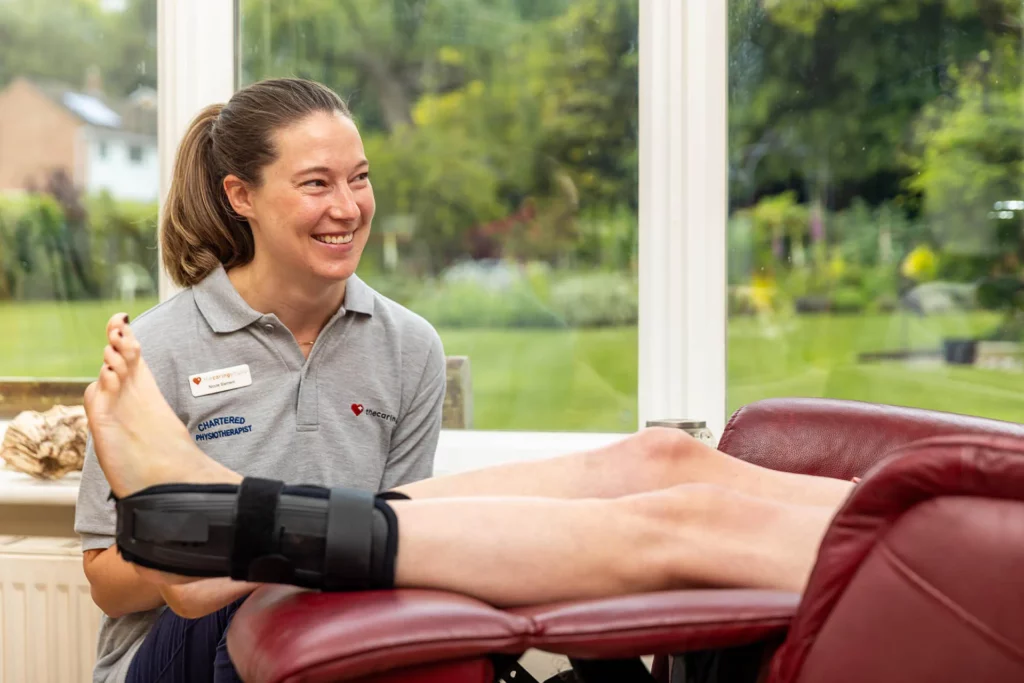
Common Conditions We See:
- Knee ligament sprains
- Ankle fractures
- Lower back pain
- Neck pain
- Rotator cuff impingement
- Frozen shoulder
- Sciatica
- Knee and hip arthritis
- Patella tendonitis
- Tennis and golfer’s elbow
- Hip bursitis
- Iliotibisl band disorder
- Fibromyalgia
- Chronic Pain
- Any other muscle or joint pain