
Home Visit Physiotherapy in Oxford
Get in touch today
If you have any questions or to see how we can help
Physiotherapy at home in Oxford, Headington and Summertown
Wherever you live in Oxford, from Summertown and Headington out to Kidlington, our physiotherapists will see you in your own home.
Oxford stretches a long way beyond the colleges: Headington and Marston up the hill to the east, Summertown and Wolvercote to the north, Cowley, Iffley and Blackbird Leys to the south, and the villages out towards Kidlington and Cumnor. Some families ring while a parent is still on a ward at the John Radcliffe, or a few days after a new hip at the Nuffield Orthopaedic Centre. Others ring sooner, when Dad in Headington has started to dread the stairs, or Mum in Jericho no longer walks to the shops. Watching someone you love grow unsure on their feet is hard. Helping them get steady again, at home, is what we do.
Our services in Oxford include:
- Older people’s physiotherapy — more confidence on stairs, kerbs and uneven pavements, and fewer near-misses.
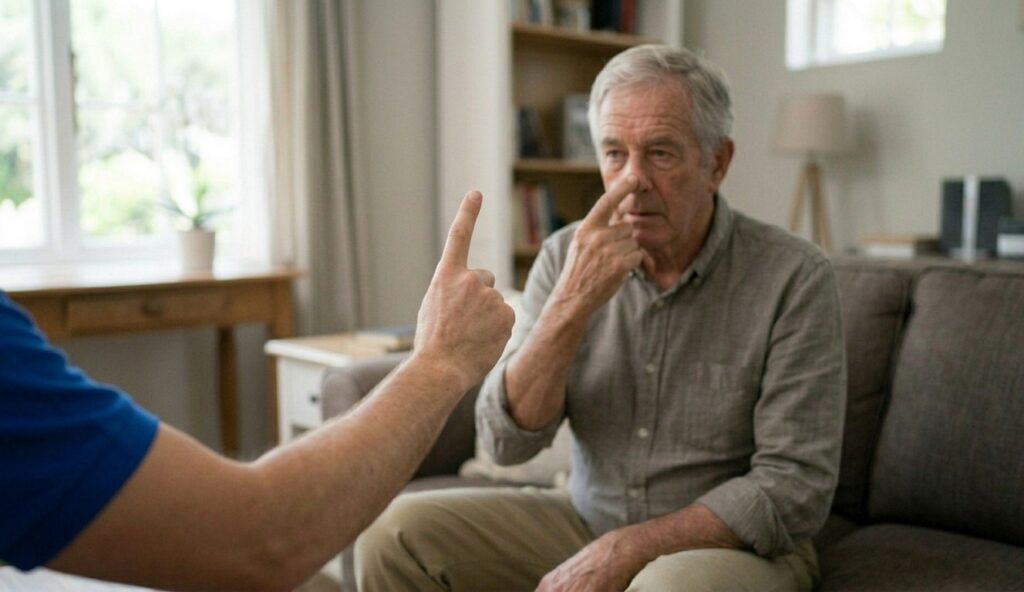
- Dementia physiotherapy — rising from the armchair and walking to the kitchen, rehearsed calmly while the person is most alert.
- Post-operative rehabilitation — new hips and knees from the Nuffield Orthopaedic Centre, and recovery after an operation at the John Radcliffe.
- Neurological physiotherapy — stroke, Parkinson’s and MS, picked up at home after the John Radcliffe’s stroke and neurosciences services.
- Respiratory physiotherapy — easier breathing and more stamina for everyday jobs.
- Muscle and joint pain — sore knees, hips and backs eased, so moving stops being a battle.
- Care home physiotherapy — individual sessions for residents of Oxford care homes.
- Rehabilitation for case management clients — home programmes after serious injury, coordinated with the case manager and, where needed, the limb reconstruction team at the Nuffield Orthopaedic Centre.
- Live-in rehabilitation care — a rehabilitation carer living in, so practice happens every day, not only on visit days.
Why families in Oxford come to us
Oxford is often thought of as a young city, but it is getting older too. Its population grew by 6.7% to around 162,000 between the 2011 and 2021 censuses, and the number of people aged 50 to 64 rose by around 4,300, an increase of 22.8%. At the last census, 10.9% of Oxford households were someone aged 66 or over living alone (Office for National Statistics). Those are the people who most want to stay in their own homes, and whose families most want to make that safe.
What families in Oxford can expect from us:
- Chartered and registered. Each physiotherapist is on the HCPC register, belongs to the CSP and is insured to treat at home and in care homes.
- Already on an NHS list? We have no list of our own, so we can begin now and fit in around the NHS physiotherapy when it comes.
- We find solutions. Narrow stairs, a cluttered hall, a frame that will not fit: we work with the equipment you already have and find ways to make your rehab easier at home.
- Later life is our main work, from the first wobble to life in a care home.
- On your side when the GP, the carers or the family need to hear what is going on.
- Nobody is written off here. Told it is too late or not possible? We will reassess and give you a straight answer.
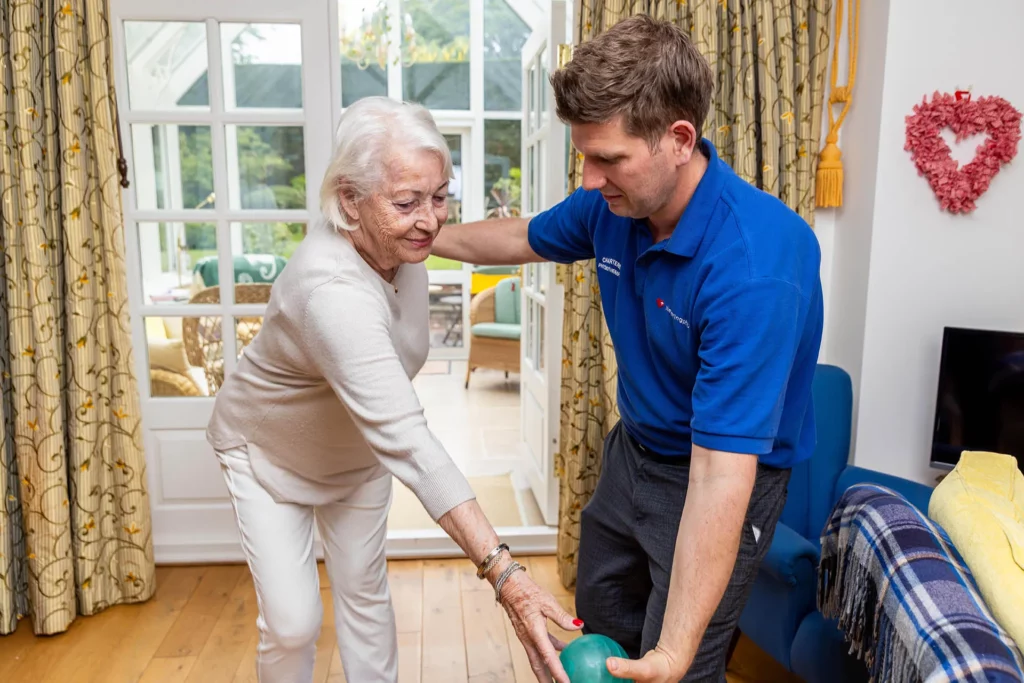
We send a short questionnaire ahead of the first appointment, so we arrive already knowing the medical background and what has happened recently. The time in the house goes on seeing you move: rising from your chair, turning in the hallway, tackling the stairs. From that we can usually tell what is holding you back, which is often fear of falling or a sore joint rather than weak muscles, and we begin treating it the same day. You end the visit with a single goal you have picked, and anyone who helps you day to day is shown how to support it.
Your physiotherapists in Oxford
Our Oxford physiotherapists are all chartered, with extensive experience in NHS hospitals and community services. Wherever possible the same person comes every time; when they are on leave, a colleague who has read up on you takes over, so you never have to explain it all again.




What Oxford families say
“We enlisted Will and the team for my dad, who is 83 and broke his hip — and who also has dementia. They were absolutely fantastic. They advised on live-in care so he could return home within two weeks, and trained his carer to support the exercises daily. Dad’s recovery has been astounding.”
Kathy G., Oxford · hip repaired at the John Radcliffe
“I first spoke to Christina, who understood my needs and quickly referred me to Naomi, my nearest physio. She showed me breathing and strengthening exercises and made sure I understood my problems and how to reduce them. I cannot praise her enough.”
Anne & Bob L., Oxford · breathing and strength
“The fact that the Caring Physio came to treat her in her own home was very helpful, and the exercises and advice really strengthened her weak leg. I’m confident this helped her subsequent hip replacement be so successful.”
Mary M., Oxford · before and after a hip replacement
The parts of Oxford we visit
North and central
- Jericho
- Summertown
- Wolvercote
- Marston
- Botley
East and south
- Headington
- Cowley
- Iffley
- Littlemore
- Rose Hill
- Blackbird Leys
Villages around Oxford
- Kidlington
- Yarnton
- Eynsham
- Cumnor
- Kennington
- Wheatley
- Horspath
- Garsington
That covers most of OX1, OX2, OX3, OX4 and OX5, and parts of OX33 and OX44. Further out towards Abingdon, Didcot or Witney, ring and we will tell you straight away who can reach you.
What Oxford families want back
Nobody rings us asking for stronger thigh muscles. They ring because a normal part of the day has started to go wrong. These are the things Oxford families most often want back.
- Getting up the stairs to bed without stopping halfway.
- Washing at the sink or in the shower without needing someone at the door.
- A trip round the Covered Market and back to the bus stop.
- A short walk in the University Parks with the grandchildren.
- Getting in and out of the car so you can visit your family.
- Standing at the kitchen worktop long enough to cook a proper meal.
We note where things stand at the first visit, so you can see the difference rather than take our word for it.
Conditions we treat at home in Oxford
- After a hip fractureWalking, stairs and confidence again after a broken hip.
- Hip or knee replacementBuilding up from crutches to outdoor walks, in step with what your surgeon has advised.
- StrokeGetting the weaker side to work again through standing, stepping and everyday tasks.
- DementiaGentle, unhurried sessions timed for the brighter part of the day, with carers shown what to keep up.
- Falls and balanceWorking out what caused the fall, then strengthening legs and balance so it is less likely to happen again.
- Breathlessness and COPDBreathing control and pacing, so the stairs stop being the whole morning.
Each of these has its own page: see post-operative physiotherapy, neurological physiotherapy and respiratory physiotherapy.
The John Radcliffe treats the emergency. Your own home is where recovery is won.
Emergencies, major trauma and stroke from across Oxfordshire go to the John Radcliffe in Headington, the major trauma centre for the Thames Valley and home to Oxford’s neurosciences and stroke services. Planned hip and knee replacements and complex fractures are often treated at the Nuffield Orthopaedic Centre, which also runs a limb reconstruction and bone infection service. The Churchill sits close by, and the private Manor Hospital (Nuffield Health) carries out planned surgery too.
Hospital corridors have grab rails and flat floors throughout. Your house has a steep staircase, a narrow bathroom and a raised sill at the back door, and those are what need practising. We practise it with you there. Tell us the discharge date and we will plan the first visit around it; we can usually be with you within one to five days of your first call.
A hospital stay costs more the older you are, and strength can still come back
In a US study of patients aged 70 and over admitted to hospital with an illness, about a quarter of those aged 70 to 74 left less able to manage everyday tasks than before, rising to half of those aged 85 to 89. It does not have to stay that way. In a trial of 100 frail people with an average age of 87, those who did strength training gained 113% in muscle strength; those who did not gained 3%.
Covinsky et al., Journal of the American Geriatrics Society, 2003 · Fiatarone et al., New England Journal of Medicine, 1994
How we close the gap
No time lost
The longer someone sits, the more ground there is to make up. We start as soon as we can so less of it is lost.
Exercises done with you
Not a sheet left on the table. We do each one alongside you, correct it as you go and change it as you improve.
The right equipment for now
The frame, chair or rail that suited you last month may be holding you back today. We check it and change it as you improve.
Flat enough to start with
The towpath at Port Meadow or by Iffley Lock is level and close to home for many of our patients. It makes a good first outdoor goal, and we build towards it from the doorstep.
FAQ - Your local questions
Will you come to us anywhere in the city?
Yes. We visit every part of Oxford, from Wolvercote down to Blackbird Leys and from Botley across to Headington, and see people in their own houses, flats, sheltered housing and care homes. Treating you at home lets us work on the real obstacles: the step into the garden, the bath you can no longer get out of, the chair you have to rock out of. The first appointment combines a proper look at how you are managing with hands-on treatment, so by the end you will know what we think is achievable.
Dad has just had his knee done at the Nuffield Orthopaedic Centre. Can you take over at home?
Yes. We see a lot of people in the weeks after joint replacements and fracture surgery at the Nuffield Orthopaedic Centre, the John Radcliffe and the Manor Hospital. Those weeks decide whether the exercises become routine or get abandoned, so we do them with him rather than leaving a printed sheet, and we move him on as the knee settles. We follow the surgeon’s instructions throughout. If you know the date he is coming home, ring us with it and we will arrange the first visit to fit.
My wife has Alzheimer’s and forgets exercises straight away. Is there any point?
Yes, and forgetting the exercises does not stop progress. Memory for new instructions fades quickly in dementia, but well-practised movements stay for much longer, so we work on real tasks in her own surroundings: getting up from her own chair, walking her own hallway, at the time of day she is usually at her best. We show whoever is with her how to keep it going between visits, and we can point you to support such as Dementia Oxfordshire. Our Clinical Director, Will Ferguson, leads our dementia work.
Can we ring you ourselves, or does a doctor have to refer us?
No. You can ring us yourself, and so can a relative, a care home or a case manager. We are an independent service of chartered physiotherapists, so there is no referral form to wait for and nothing to fill in before the first call. With your agreement we let the GP know what we are doing, so everyone involved in your care is working from the same picture rather than finding out later.
We live out in Cumnor. Is that too far?
No. Cumnor is one of the villages we visit regularly, along with Kidlington, Yarnton, Eynsham, Wheatley, Botley and Boars Hill. A few extra miles make no difference to the length of the visit or what we work on, and the work still happens on your own paths and stairs. Families often assume they are too far out and never ring. If your village is not on this page, call and we will tell you straight away whether we can reach you.
Mum hasn’t walked to the shops in Headington for months, but she hasn’t fallen. Should we wait?
Don’t wait for a fall. When somebody quietly stops a walk they have done for years, the leg strength that walk was using starts to go within months, and by the time a fall happens there is often a year of slow decline behind it. That gradual loss is also the part that responds best to treatment. We would build towards the walk she has given up, the front step, the kerb, the bus stop or the shop itself, rather than exercises that have nothing to do with it.
Dad already has carers morning and evening. Wouldn’t you just be doubling up?
No. His carers make sure each day happens safely; we make sure he can still do some of it himself. If everything is done for him, he will not get stronger, because every stand or walk somebody else does is practice he misses. Nobody is to blame for that, as helping quickly feels kind. We show the carers where small bits of rehabilitation fit into the routine they already follow, and we leave written guidance. Our fees are set out on our FAQ page.
Local support in Oxford
Families often ask us what else is available alongside physiotherapy. These local organisations are the ones we point people to most, and none of them needs a referral from us.
Age UK Oxfordshire — information, advice and practical help for older people, on 0345 450 1276.
Dementia Oxfordshire — dementia advisers for the person and their family, on 01865 410 210.
Carers Oxfordshire — free advice and support for anyone looking after a relative.
Oxfordshire County Council adult social care — the place to ask about a care needs assessment, home equipment or help in the house.
Care homes in Oxford
Oxford has care homes all over the city, such as Bupa’s Green Gates off the Banbury Road in Summertown and the Orders of St John Care Trust’s Townsend House on Bayswater Road, Headington. Where a parent has moved into a home, families often ask us to add one-to-one physiotherapy to the care already in place. We see the resident in their own room, fit the visits around the home’s routine and leave the staff a short note of what to keep practising. There is more about physiotherapy for care home residents on its own page.
Care home managers in Oxford — get in touch to discuss regular visiting physiotherapy for your residents.
Oxford is one of our Oxfordshire areas, alongside home visit physiotherapy in Banbury, Henley-on-Thames and Wantage. If the town you need is not listed, see all the areas we cover, or ring us and we will tell you honestly whether we can reach you.