Rehabilitation Services to Case Managers

If You Are Looking For Physiotherapy For Your Case Management Client:

We regularly work with case managers, helping their clients get the best possible rehabilitation in their homes. We understand the impact a life changing injury has on someone’s life and on their family. We carry out our therapy with professionalism and compassion.

We also understand your need as the case manager to find an expert rehabilitation provider that is reliable and can provide tailor made treatment plans and timely reports. We will provide you with timely and detailed progress reports that will enable you to make informed decisions based on solid clinical reasoning and make adjustments to the treatment plan as necessary.

Our friendly and caring approach and the convenience of us going to your client to provide rehabilitation in their own home guarantees we give them the best therapy on offer. We work closely with family members, other medical professionals, occupational therapists, and legal teams to ensure your client receives excellent support and that their individual needs are met.

Our team consists of highly experienced and qualified physiotherapists with relevant experience including Complex poly trauma & Orthopaedic physiotherapy as well as Neurological physiotherapy.

Usually within days, and we aim to be in the house inside the first week after a discharge. We know that a case manager is often working to a deadline that is not of their making — a discharge date that has moved, a package that starts on Monday — and that a provider who cannot start for three weeks is no use. Tell us the date and we will tell you honestly whether we can meet it.

Yes. Complex post-surgical and case-managed rehabilitation is one of our core areas — multiple fractures, revision joint surgery, prolonged immobility and the deconditioning that comes with it. We are used to long rehabilitation with changing goals, and to working alongside other disciplines rather than in isolation.

Whatever the case requires. As standard we measure at the first visit and report against those measures, so progress is a fact rather than an impression. We are used to writing for case managers, insurers and solicitors, and to being asked for something specific — goal-based reporting, outcome measures, a view on prognosis, or a note on whether a package should change.

Yes, wherever it is possible, because continuity is most of what makes long rehabilitation work. Nobody starts again from the beginning, progress carries forward between visits, and somebody notices when a thing has changed. Where a second physiotherapist is needed for cover or for a specialism, we brief them properly rather than sending somebody cold.

Yes, and we are careful to work alongside rather than across them. NHS community rehabilitation is usually time-limited and goal-limited by design — teams continue while there are therapy goals they can address, then discharge. A great deal of our work begins exactly at that point. Where an NHS team is still involved we will coordinate rather than duplicate.

We cover twenty counties, from Northumberland and Tyne and Wear down through the Midlands to London, Surrey, Hampshire, Berkshire and the South West. The realistic limit is how far a physiotherapist can sensibly travel in a working day. If a client sits outside our usual patch, ask anyway and we will tell you honestly whether we can reach them rather than stretch and let you down.

Yes, where the case warrants it and where it is clinically sensible. Intensity helps, up to the point where recovery time is compromised — working somebody hard enough to make a difference but not so hard it sets them back is most of the skill. We will tell you what we think the right frequency is, including when that is less than you were expecting.

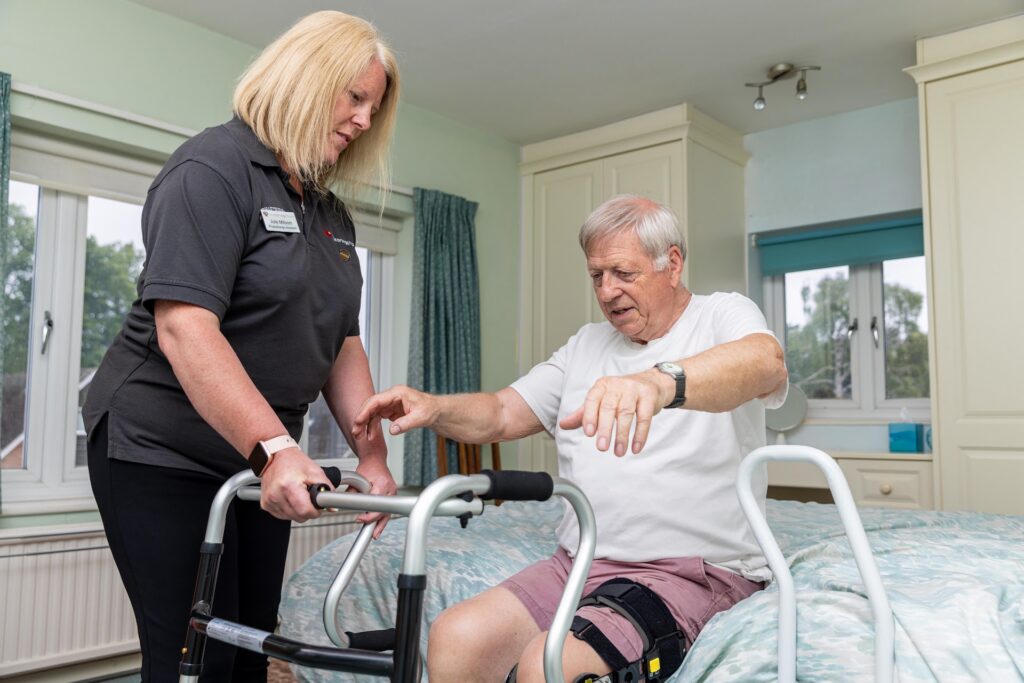
Yes. Where a client has a care package, a great deal of the outcome depends on what happens on the days we are not there. We train the care team in the specific transfers and exercises that client needs, so a transfer or a walk to the bathroom becomes part of the rehabilitation rather than separate from it.

Yes, within our scope. We see the house, the stairs and the transfers in practice rather than on paper, and we are often the first to notice that a piece of equipment is doing more harm than good, or that a client has outgrown it. Where a formal assessment is needed we will say so and work with the occupational therapist rather than encroach.

Our fees are published openly on the pricing page — an hourly rate plus mileage for the round trip. We are used to invoicing case management companies, insurers and solicitors directly, and to whatever authorisation process a case requires. Ask and we will confirm the arrangements in writing before anybody visits.

Physiotherapist doing arm exercises with a smiling older woman holding a small exercise ball at home

Complex Poly Trauma & Orthopaedic Physiotherapy

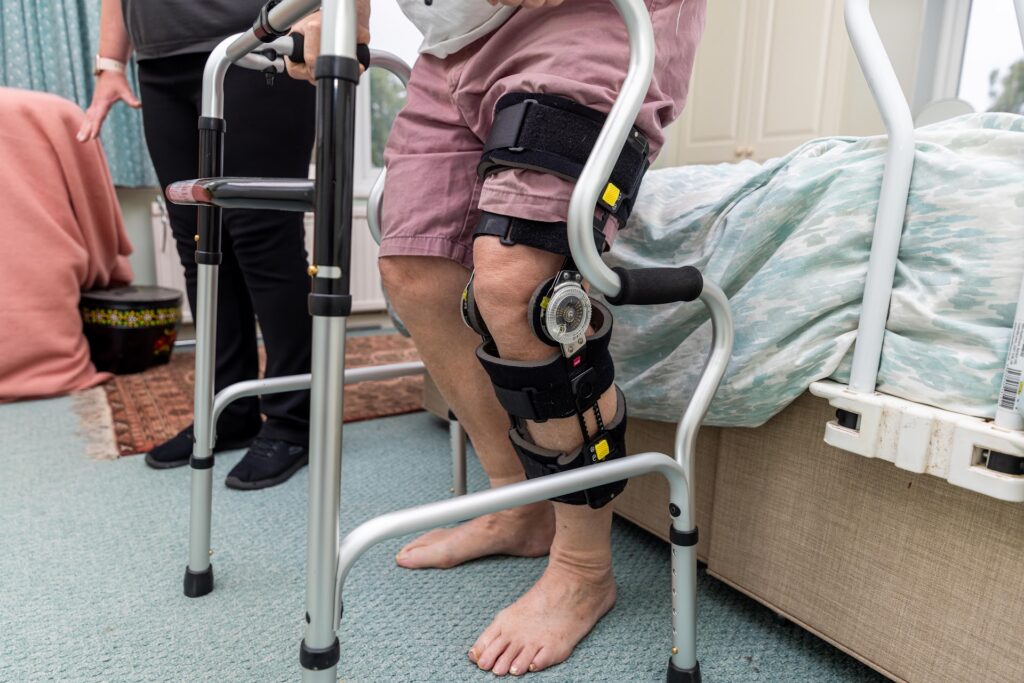
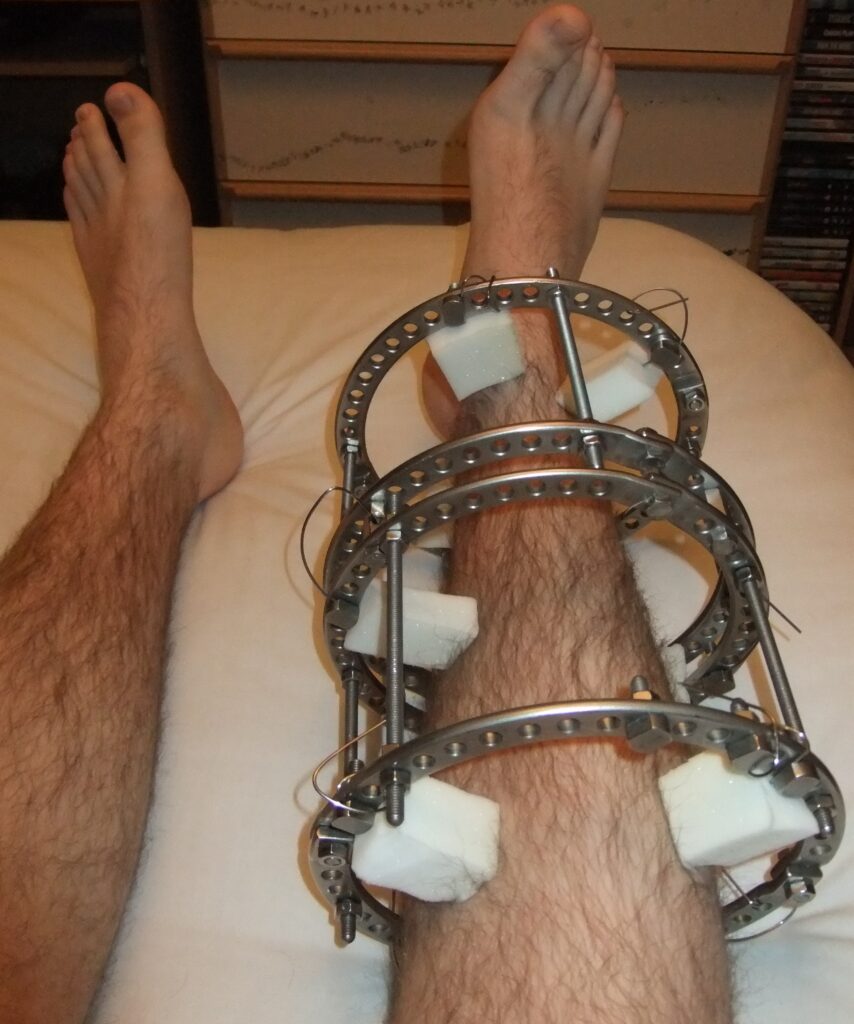
We have experience in providing rehabilitation for complex poly trauma and orthopaedic cases after injuries, amputation or surgery. We regularly partner with leading poly trauma consultants and other members of the multidisciplinary healthcare team.

Neurological Physiotherapy

We also have experience in providing neurological physiotherapy for case management clients following complex and catastrophic injuries including acquired brain injury and spinal cord injury. Our neurophysiotherpists will help your client recover as they learn to use their limbs again and also help them improve their cognitive function as they start to plan their life and take back control.

Amputee & Prosthetic Rehabilitation

We also provide specialist rehabilitation for clients following amputation — from early post-operative recovery through to prosthetic training, gait re-education and the management of phantom limb pain — helping your client rebuild mobility, confidence and independence at home. Our team includes physiotherapists with specialist NHS backgrounds in this field, including Kate Lancaster, who spent many years as a specialist amputee physiotherapist at one of the UK’s leading limb-loss rehabilitation centres. Where a client needs intensive day-to-day support, we can combine physiotherapy with live-in rehabilitation care so progress continues between visits.

A recent example

We recently supported a gentleman home after almost a year in hospital. A serious injury had required a long series of operations and, ultimately, an amputation, and the extended hospital stay was beginning to take a toll on his mood and motivation. Working alongside his case manager, we helped him return home with live-in rehabilitation care, so his rehabilitation could continue in familiar, comfortable surroundings. For many people, home is the best place to recover — not only physically, but emotionally too — and being back in his own environment has made a real difference to both his progress and his outlook.