
Respiratory Physiotherapy
Respiratory Physiotherapy
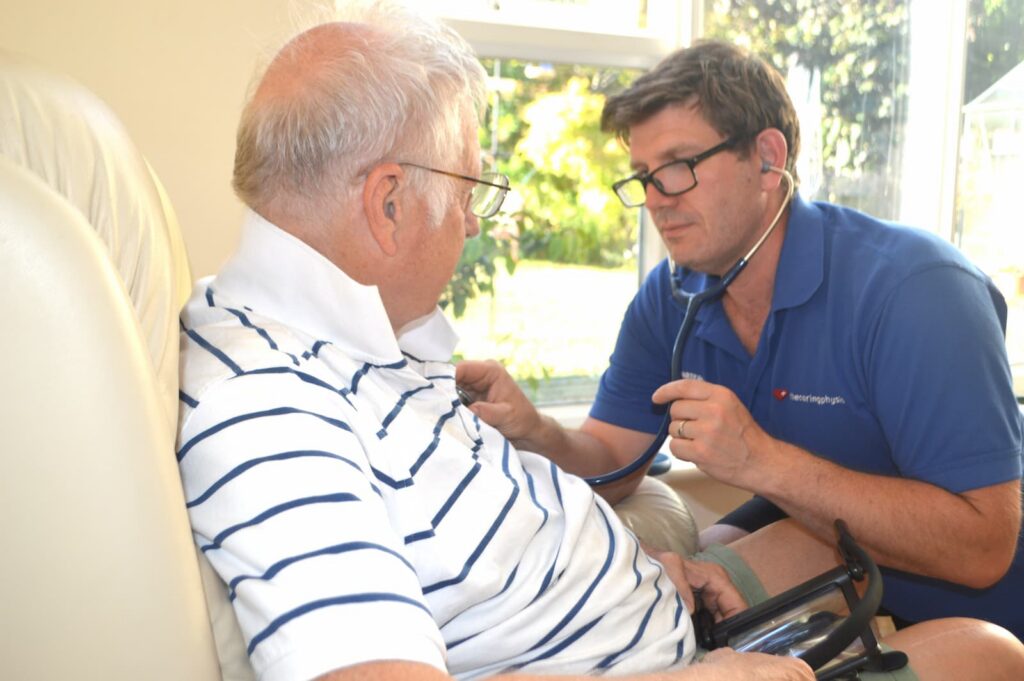
We offer respiratory physiotherapy at your home to help you clear your lungs of sputum after an infection and help you breathe better. We will help you control your breathlessness with some tried and tested techniques and the right advice on helpful positions to regain your breath. It is common to become anxious and lose your confidence after an episode of shortness of breath, as your lungs struggle to cope with chest infections, pneumonia or after an asthma attack. We will support and encourage you to remain independent by teaching you pacing exercises and suggest some adaptive equipment to lighten the demand of your daily tasks and activities.
You may be incapacitated in bed and be on antibiotics with a heavy cough. We can come and perform chest clearing physiotherapy in bed and help move the sputum in the bottom of your lungs so that you can cough it up. These techniques are manual and require some firm but supportive hands-on techniques. People find them very beneficial as it is very effective, helping you catch your breath again and reduce the need to cough and waste energy in doing so. We use a simple device called an incentive spirometer that has a mouth tube connected to a plastic box with some plastic balls in. As you breathe in and hold, the balls rise for as long as you can take a big sustained breath. This mini game helps you get the air to the bottom of your lungs and inflate the lung fully, protecting it from collapsing and moving the sputum to the larger airways where they can be cleared with a cough.
Read More
We also teach relaxation breathing techniques to help you breathe in a more efficient way. Often when we are short of breath due to a chest infection, we can get very anxious. As we become anxious our breaths can become too fast and too shallow, which makes the shortness of breath worse and we start to panic. We can use pillows to make sure you are relaxed and comfortable, putting the lung in the best position for the air to get into the bottom of your lungs. We will teach you how to use the right muscles to optimise and control your breathing. We use Oxygen monitors to help give you feedback so you feel in control. We also use mental imagery and storytelling to help get you to a relaxing place in your mind, keeping you calm and in control of your breathing.
There is a common association between getting a chest infection and losing your overall muscle strength and independence. If you are very weak and stuck in bed we will endeavor to get you out of bed and into a suitable chair. If you don’t have the right chair to optimise the position of your lungs, then we will refer you to the NHS community Occupational Therapist or make suggestions for you to purchase the right equipment such as a wheelchair or a supportive armchair.
If you have an Oxygen requirement and have home oxygen we will help you manage your daily tasks and help you walk outside with confidence. We understand how scary It must be to rely on Oxygen from a cylinder, but don’t worry we will teach you ways to manage and not let this stop you doing some of things you want to. It is very likely that your condition will have physical limitations but there is still a lot you can do independently. With our help we can try things together so that you maintain as much independence as possible.
Lung cancer | Chest infection | Pneumonia | Bronchitis | COPD | Asthma
Pulmonary Fibrosis | Emphysema | Broken ribs or other chest trauma | Covid 19
What does respiratory physiotherapy at home actually involve?
Mostly two things: clearing the chest, and rebuilding what breathlessness has taken away. Chest clearance uses positioning, breathing techniques and assisted coughing to move secretions somebody can no longer shift alone. The second half is exercise — graded, paced work that improves stamina and, just as importantly, teaches somebody that being breathless is not the same as being in danger. Both happen in the house, with the stairs and the hallway they actually use.
My father has COPD and gets breathless on the stairs. Can that improve?
Usually, yes — and more than people expect. Breathlessness makes people move less, moving less makes them weaker, and weaker muscles need more oxygen for the same task. It is a loop, and it is reversible at almost any stage. The work is pacing, breathing control, and building the legs so the stairs cost less. We would measure how far he gets now, so improvement is a fact rather than an impression.
He has just come home after a chest infection and seems to have gone backwards badly. Is that normal?
It is very common and it is worth acting on quickly. A week or two in bed with a chest infection costs a surprising amount of muscle, and older people lose it fastest. What families describe as “he never got over it” is usually deconditioning rather than the infection itself, and deconditioning responds to work. The first fortnight home is when most ground is lost, so the sooner somebody starts, the less there is to rebuild.
Can you help somebody with a weak cough who keeps getting chest infections?
That is one of the main reasons we are called. A cough that cannot clear the chest leads to repeated infections, repeated antibiotics and repeated hospital admissions. We work on effective cough technique, positioning and, where it is appropriate, assisted techniques — and we teach the family or the care team to do the same on the days we are not there, because that is what changes the pattern.
Which conditions do you commonly see?
COPD and emphysema, bronchiectasis, recovery after pneumonia or a chest infection, long-term breathlessness after Covid, neuromuscular conditions where the cough has weakened, and people who have become deconditioned after any prolonged illness. We also see a great many people whose main problem is simply that breathlessness has frightened them into stopping.
Do you work with somebody on home oxygen?
Yes. Home oxygen does not rule out exercise — in most cases it makes carefully judged exercise more possible, not less. We work within whatever has been prescribed, monitor saturations during sessions, and will contact the respiratory team or the GP if we think the prescription needs reviewing. We do not change anybody’s oxygen ourselves.
Is it safe to exercise when somebody is already short of breath?
Safe, and generally necessary. Breathlessness on exertion is uncomfortable rather than dangerous for most people, and avoiding it is what makes it worse over time. The skill is in judging the level — hard enough to make a difference, not so hard it sets somebody back. We monitor, we pace, and we stop when we should. If there is a reason not to exercise, we will find it at the assessment and say so.
Do we need a GP or consultant referral?
No. We are chartered physiotherapists and you can contact us directly. With permission we will write to the GP or the respiratory team if we find something that needs a doctor — a chest that is not clearing, a medication question, a change we are not happy with — and we are glad to report progress if they want it.
How often would somebody be seen, and for how long?
Chest clearance work is sometimes intensive for a short period, then tapers. Exercise and stamina work is slower — usually weekly for six to eight weeks, then less. We measure at the first visit and review against those measures, and we say plainly when the work has stopped adding anything rather than keeping a visit in the diary.
Can you teach the family or carers to help between visits?
Yes, and it is often the most useful part. Positioning, pacing, breathing control and when to worry are all things a spouse or a daughter can learn in an hour and use every day. We show whoever is there what helps and what to leave alone. Our fees are published in full on the pricing page.
Common Respiratory Conditions
- Lung cancer
- Chest infection
- Pneumonia
- Bronchitis
- COPD
- Asthma
- Pulmonary Fibrosis
- Emphysema
- Broken ribs or other chest trauma
- Covid 19