
Neurological Physiotherapy
Home-visit neuro physiotherapy for stroke, Parkinson's and MS
Our team of neurophysiotherapists are committed to help you regain your mobility, improve your independence, and enhance your quality of life after a neurological injury.
We offer personalised exercise and management plans for a wide range of neurological conditions listed below. Our home-based neuro physiotherapy services are designed to cater to your individual needs which are identified after a comprehensive assessment to evaluate your condition and how it has an impact on your life. Together we will design a personalised treatment plan to help you achieve your goals using a combination of motor relearning, balance re-education, muscle strengthening and gait retraining to help you improve your mobility.
We understand that the impact of neurological injuries can vary and our services range from helping regain their ability to walk again to people who need assistance setting up positional plans in their specialist chairs and electric beds, to maintain good joint position and soft tissue length. We dedicate our time working closely with your family members and carers to help them better understand your condition and teach them some exercises and tips they can do between physio sessions.
Take the first step towards recovery today. Contact us to learn more about our home-based physiotherapy services and how we can assist you or your loved ones on the path to better health and independence.
Starting Quickly Matters
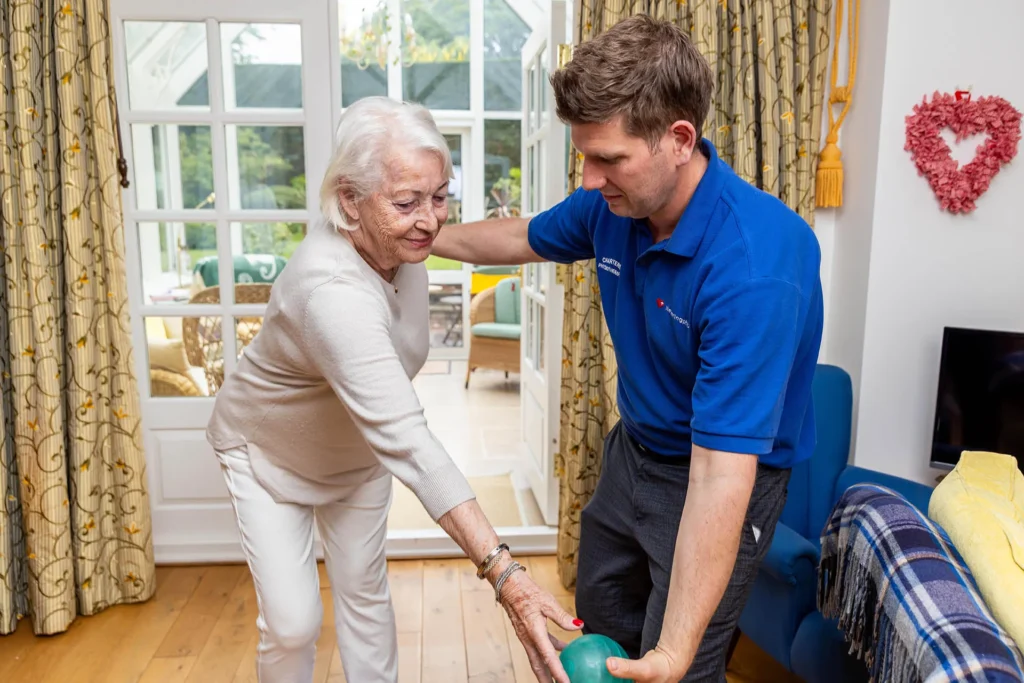
The weeks and months after a stroke or brain injury are when the nervous system is most responsive to rehabilitation. It is the period when focused, repeated practice tends to achieve the most — which is why we don’t think anyone should spend it waiting.
We aim to see you within a week of referral. There is no waiting list and you do not need a GP referral. You can contact us directly, or a family member, case manager or hospital discharge team can arrange it on your behalf. In many areas we can arrange a first home visit within a few days, sometimes the next day.
If you are being discharged from hospital we can often start straight away, working alongside any NHS therapy you are already receiving rather than replacing it.

Common Neurological Conditions We Treat
- Stroke: Assisting with mobility, coordination, and strength to promote recovery and reduce complications.
- Parkinson’s Disease: Improving balance, flexibility, and movement to maintain daily function and reduce fall risks.
- Multiple Sclerosis (MS): Managing symptoms such as muscle weakness, fatigue, and spasticity with tailored exercises and therapies.
- Spinal Cord Injuries: Aiding in functional recovery, pain management, and mobility enhancement.
- Traumatic Brain Injuries (TBI): Supporting cognitive and physical recovery through structured rehabilitation programs.
- Cerebral Palsy: Enhancing motor skills, posture, and mobility in children and adults.
- Neuropathy: Addressing nerve-related pain, weakness, and coordination challenges.
Neuro Physiotherapy FAQs
How soon after a stroke should physiotherapy start?
As soon as you are medically stable and able to take part. The early weeks and months are when the nervous
system adapts most readily, so that period is worth using well. We aim to see people within a week of referral for
exactly this reason. If you are still in hospital, we can often begin as soon as you are discharged.
My stroke was years ago. Is it too late to benefit?
No. Improvement does not stop at six months or a year, and we regularly work with people a long time after their
stroke — often because something has changed, rather than because the stroke itself is recent.
My relative had a stroke some years ago and has now had a fall, a fracture or a chest infection. Can you help?
Yes, and this is a large part of what we do. A recent setback on top of an existing neurological condition is a
particular situation: the person often loses ground quickly, and standard rehabilitation may not account for the
neurological picture underneath.
We assess both together — the new problem and the existing condition — and work to get you back to where you
were before the setback, and often a little further.
Can you help with freezing in Parkinson's?
Yes. Freezing — where your feet feel stuck to the floor, often in doorways, when turning, or under pressure — is one of the most distressing symptoms and one of the most responsive to the right techniques.
We use a combination of verbal, visual and auditory cueing strategies to help you break the freeze and get moving again. Which of these works best varies a great deal between people, so we work with you and your family to find the cues that suit you and make sure everyone around you knows how to use them.
We also look at where in your home freezing tends to happen — doorways and narrow turns are common — and what can be changed to make those moments easier.
Can you help with balance and falls with Parkinson's?
Yes. Falls are one of the biggest risks with Parkinson’s and one of the main reasons people lose confidence and
start doing less — which then makes balance worse still.
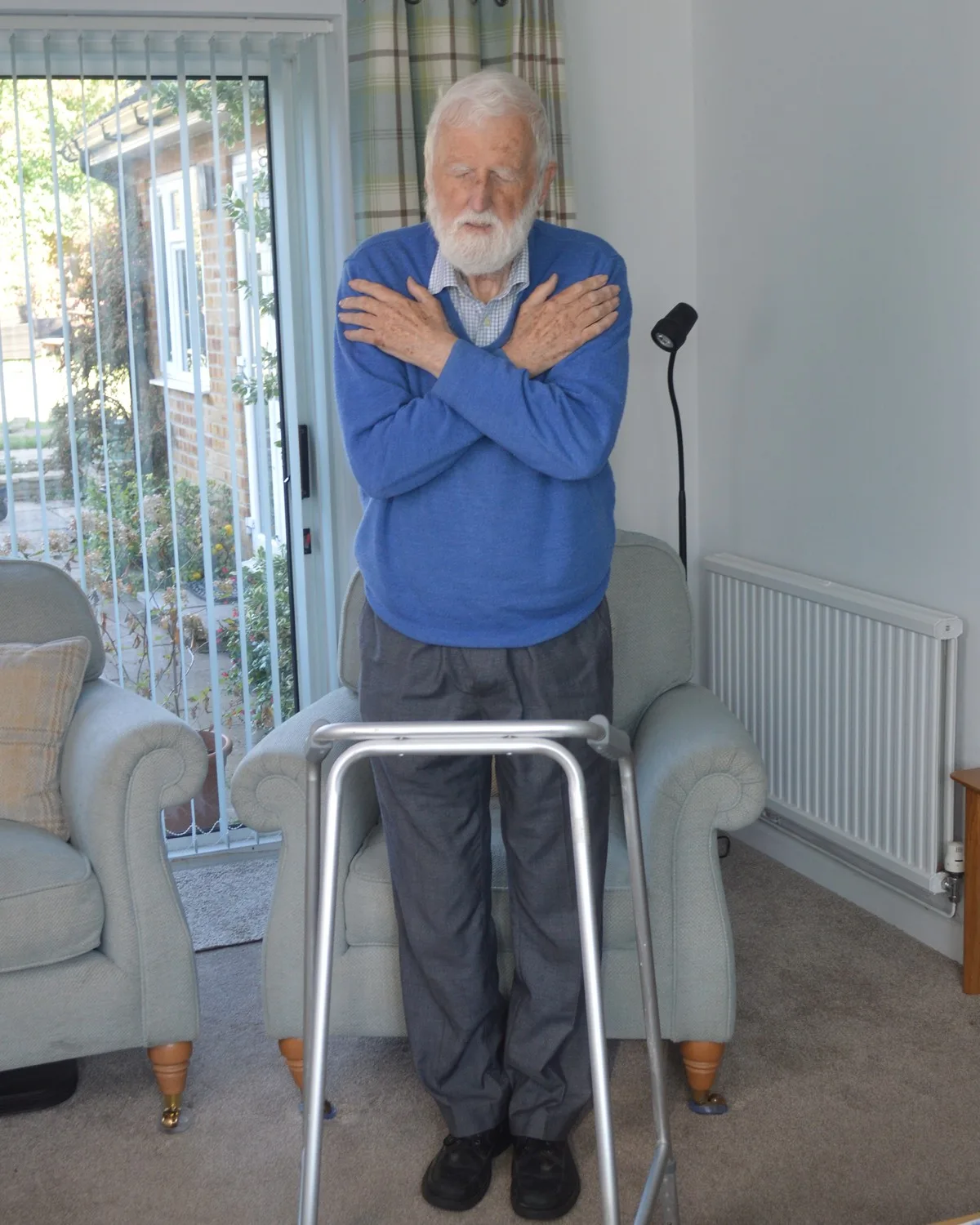
We assess your balance and walking, identify what is causing the instability, and build a programme to work on it.
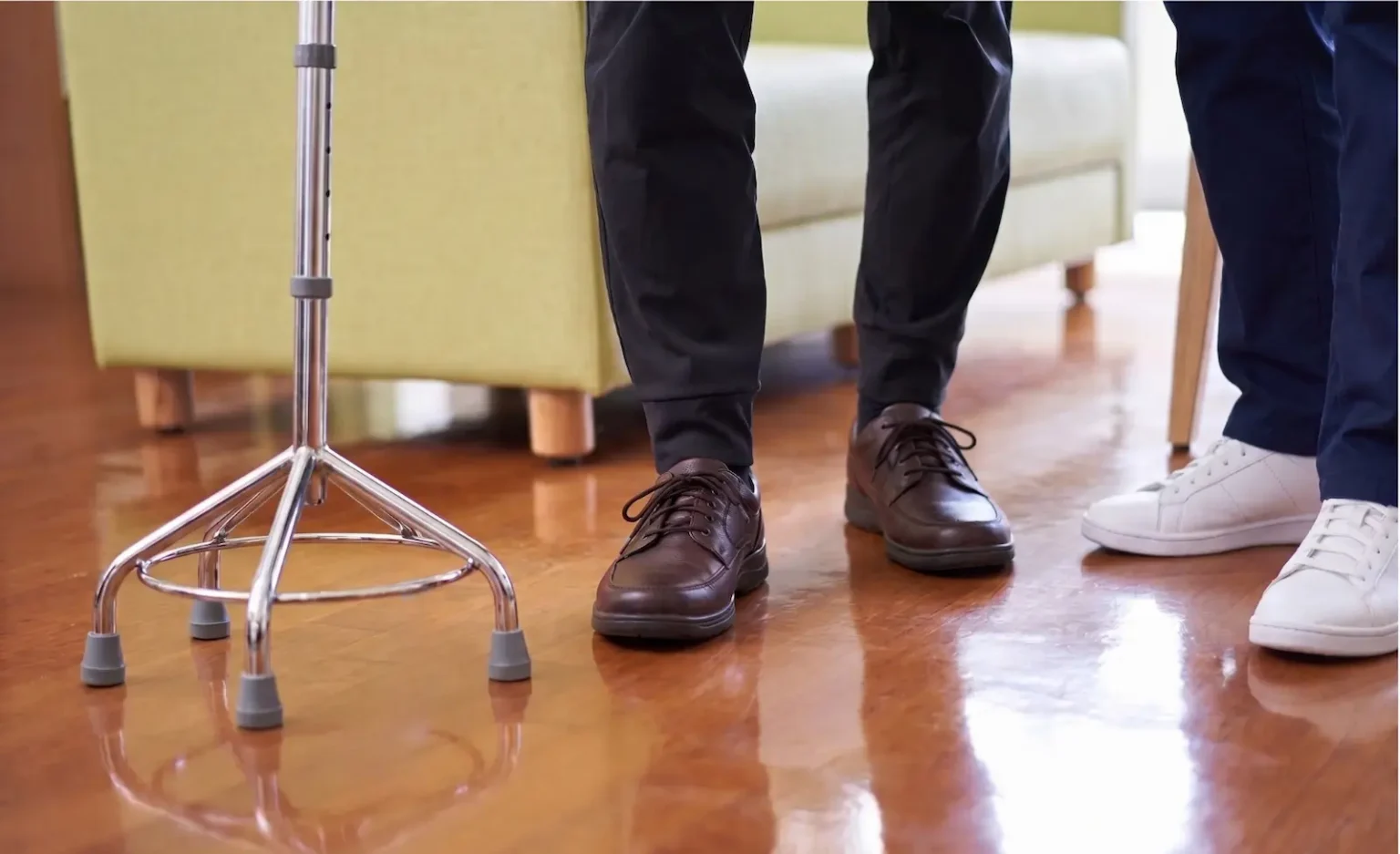
We also look practically at your home, at your walking aid if you use one, and at how you are managing transfers.
What if the person cannot walk or stand at all?
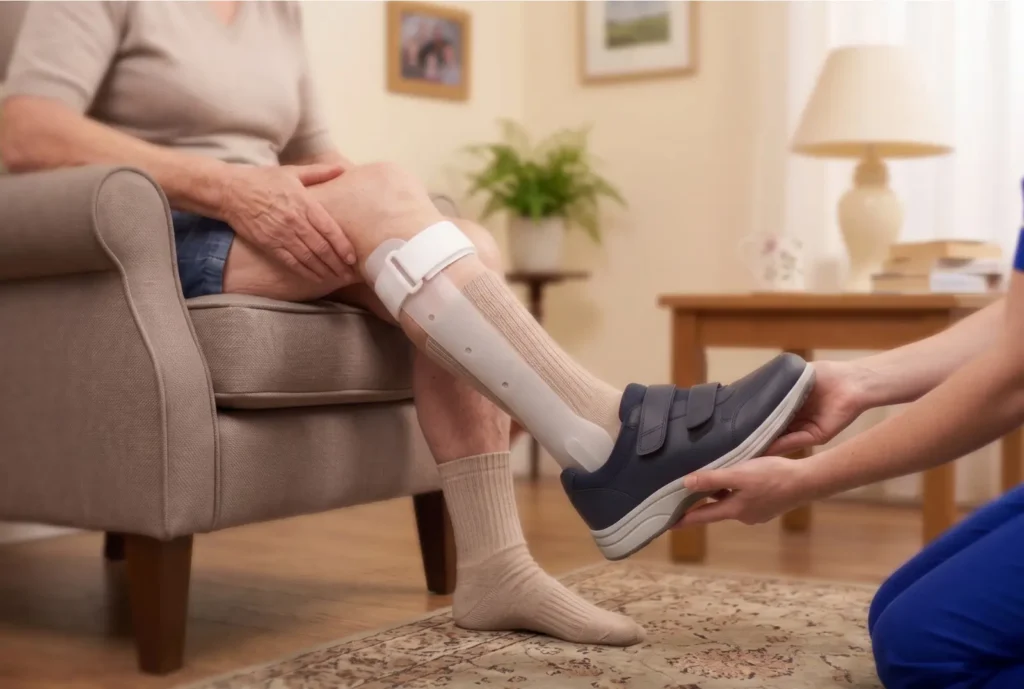
We still have a great deal to offer. For people with very limited movement, our work focuses on comfort, joint position and soft tissue length — setting up positional plans in specialist chairs and electric beds, preventing contractures, managing pain, and making daily care easier for whoever provides it.
Can you work alongside NHS therapy?
Yes, and we often do. We are not a replacement for NHS rehabilitation — most people come to us because they want more input than their NHS allocation provides, or because they have reached the end of it. Where you are receiving both, we aim to complement rather than duplicate.
Do you work with neurologists?
Yes. We accept referrals from both NHS and private neurologists, and we are happy to work alongside a consultant who is already involved in your care.
Where it helps, we can share our assessment findings and progress with your neurologist or specialist nurse so that everyone is working to the same picture. Equally, you do not need a referral from anyone to contact us — many people get in touch themselves or through a family member.
Do you carry out seating and wheelchair assessments?
Yes. The right chair makes an enormous difference, and the wrong one causes problems that are much harder to undo — pain, pressure areas, poor posture, sliding, and a gradual loss of the ability to sit comfortably at all.
We assess how you are sitting now and what you need from a chair or wheelchair: the support your posture requires, how you transfer in and out, how long you spend in it, and what you want to be able to do while you are in it. For many people the goal is simply to be comfortable enough to leave their room and spend time with other people, which changes the day entirely.
We carry out seating assessments and make chair and wheelchair recommendations, working closely with occupational therapists and specialist chair companies to get the right fit. That means you are not left with a list of suggestions and no idea what to do next — we can point you to the people who supply what you need and make sure they understand the clinical reasoning behind it.
How many sessions will we need?
We will give you an honest answer after the first assessment, once we have seen how you are moving and what you want to achieve. There is no fixed block to buy and no strings attached — you are never committed beyond the next visit.
How long people need us varies, and it depends on real things: how well you are able to carry out the exercises on your own between visits, how much support you have from family or carers, your general health and age, and thenature of the condition itself.
Neurological conditions are often long-term, so some people do see us over a longer period — either steadily, or inblocks when something changes. Others need us for a shorter stretch and then manage well on their own. Both are fine.
What we will not do is keep visiting for the sake of it. Our physiotherapists are chartered professionals and we want you to feel you are getting real value for what you spend. If you have reached the point where you no longer need us, we will tell you.