
Physiotherapy in Care Homes
Physiotherapy in Care Homes
At the Caring Physio, we focus on the care sector and work closely with care home teams. Our work in this area is extensive. We have many years of experience in providing rehabilitation services for care homes and their residents, as well as home care providers and their clients. We also deliver live-in rehab care in partnership with Sunday Therapy Care, and provide physiotherapy services to various rehabilition respite units.
We work to ensure that every individual’s potential is recognised in care settings and that no-one is considered too old for rehab.
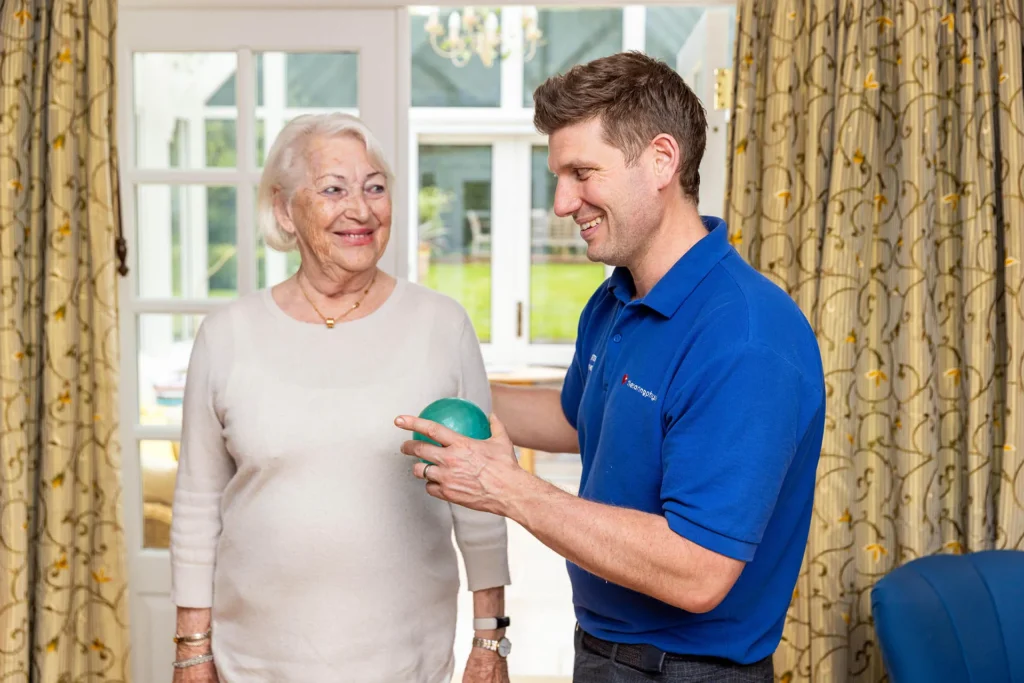
Visiting You In Your Care Home
- Assess your mobility and provide treatment and exercises to support you
- Making sure you have the right walking aid in place
- Advice your care staff on how much you can do for yourself
- Helping you regain previous levels of activity and independence after a bout of illness or hospital stay (bladder infection, fall etc)
Service Contract With Care Homes
- Mobility assessments
- Weekly physiotherapy sessions
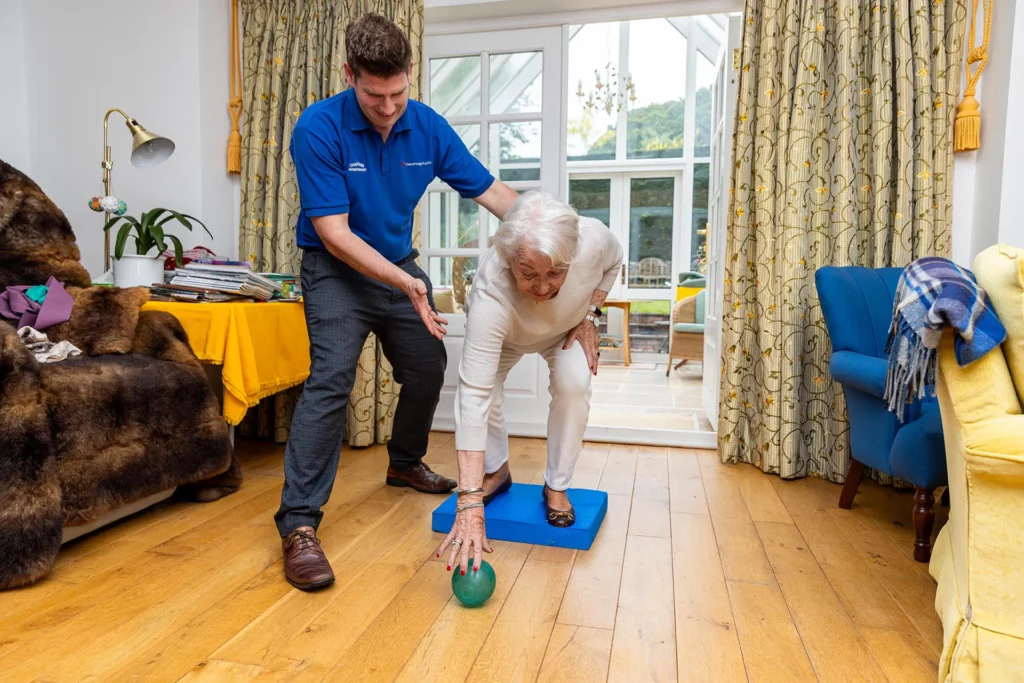
- Advising on falls prevention strategies and best practices
- Rehab after fractures
- Physio led exercise classes
- Wheelchair assessments
- Occupational health advice for staff
- Rehab care training, and moving and handling training
Our service contract physio work with one of our care home partners was featured in a video capturing Denis’s story to do a sky dive! With the right physio input and support, the sky can be the limit.
What Are The Benefits Of Physiotherapy In Care Homes?
For the Residents:
- You move more. We provide mobility assessments and build an exercise plan for you to help you remain mobile.
- We help you recover. If you have had a fall,a fracture or an illness, we make sure you have enough support to regain your confidence and independence with physiotherapy.
- We run group exercise classes so that we include everyone in doing regular physical exercise.
- Equipment suggestions. We suggest the right equipment for you, we suggest the right chair/wheelchair for your comfort, we can find you the right walking aid to keep you walking. ction reports.
For the Families:
- You can rest assured that your relative is being treated like you would and will have access to physiotherapy, helping them remain mobile, managing their pain and improving their quality of life by improving their independence.
- “ My dad was stuck in his room after a fractured spine and had lost his power in his legs. The Caring Physio helped get dad walking back to the dining room and then got us a wheelchair and an outdoor walker. Now we can take dad out into the garden, which he loves when the weather is good”
For the Care Home:
- We can provide extra staff training and equipment suggestions, improving the quality of care for the residents.
- Providing regular physiotherapy for your residents helps improve the home’s reputation and adds value to your service.
- We can assist you with your falls reduction and moving and handling policies and CQC inspection reports.
Do you visit residents in care homes, or only people in their own homes?
Both. A care home is somebody’s home, and the work is the same: helping a resident stand, walk, transfer and keep what independence they have. We visit residents whose families arrange it privately, and we also work under contract directly with homes. Either way we work alongside the home’s own staff rather than around them.
Who usually arranges and pays for it?
Most often the family. A home will provide personal care and will keep somebody safe, but sustained rehabilitation is not normally part of the fee, and families frequently want more than the home can offer. We are equally used to working under a contract arranged by the home itself, where a physiotherapist visits regularly and sees a number of residents.
Does this duplicate what the home already does?
No. A care home is staffed and regulated to keep residents safe, comfortable and well looked after, and the good ones do that extremely well. Rehabilitation is a different discipline with different training, and very few homes are resourced to provide it — nor are they expected to be. We work alongside the home rather than over it: assessing a resident properly, setting a specific physical goal, and showing the staff how the everyday moments they already handle can be used to work towards it. Nothing is taken away from what they do.
We are a care home. What does a service contract actually involve?
A regular visiting physiotherapist, on an agreed schedule, seeing an agreed group of residents. In practice that means assessments for new admissions, moving-and-handling advice that your staff can actually use, falls work with the residents most at risk, and training for your team so the exercises carry on between visits. Get in touch and we will build it around how your home runs rather than selling you a package.
Can you help reduce falls among our residents?
That is one of the commonest reasons homes call us. Strength and balance training is the intervention with the best evidence behind it, and it works in a care home setting as well as it does anywhere. Combined balance and resistance work reduces the rate of falls substantially. What matters most in practice is consistency — which is why we train your staff rather than doing it only when we are in the building.
Will you train our staff, or just treat residents?
Both, and the training is often the more valuable half. We show care staff where rehabilitation is hiding inside what they already do — a transfer, a walk to the dining room, getting up from a chair — so it becomes part of the day rather than something extra. We also give handling advice that is specific to the resident in front of you rather than generic.
Can you help somebody who is being hoisted get back on their feet?
Sometimes, and we will be honest about when it is not realistic. Hoist to stand-aid, stand-aid to their own legs is a genuine progression and it is what we aim at — but it depends on the person, not on how hard anybody tries. What we will do is assess properly, tell you what we think is achievable, and give more time to confidence and to the right equipment rather than promising an outcome.
Do you work with residents who have dementia?
Yes, routinely. It changes how the work is done rather than whether it is worth doing: shorter sessions, the same order every time, instruction by demonstration rather than explanation, and practising real things in real places. Strength and balance protect independence and reduce falls whatever else is going on.
How often would a resident be seen?
It depends on the goal. A concentrated run — often weekly for six to eight weeks — then far less, or a review every few weeks. We measure at the first visit so progress is a fact rather than an impression, and we say plainly when the work has stopped making a difference rather than keeping a visit in the diary.
Do we need a GP referral to arrange this?
No. We are chartered physiotherapists and a home or a family can contact us directly. With the resident’s permission we are glad to keep the GP and the home’s clinical lead informed, and we will write to a doctor if we find something that needs one. Our fees are published in full on the pricing page.
Common Concerns We Can Help You With
Set Hours Working
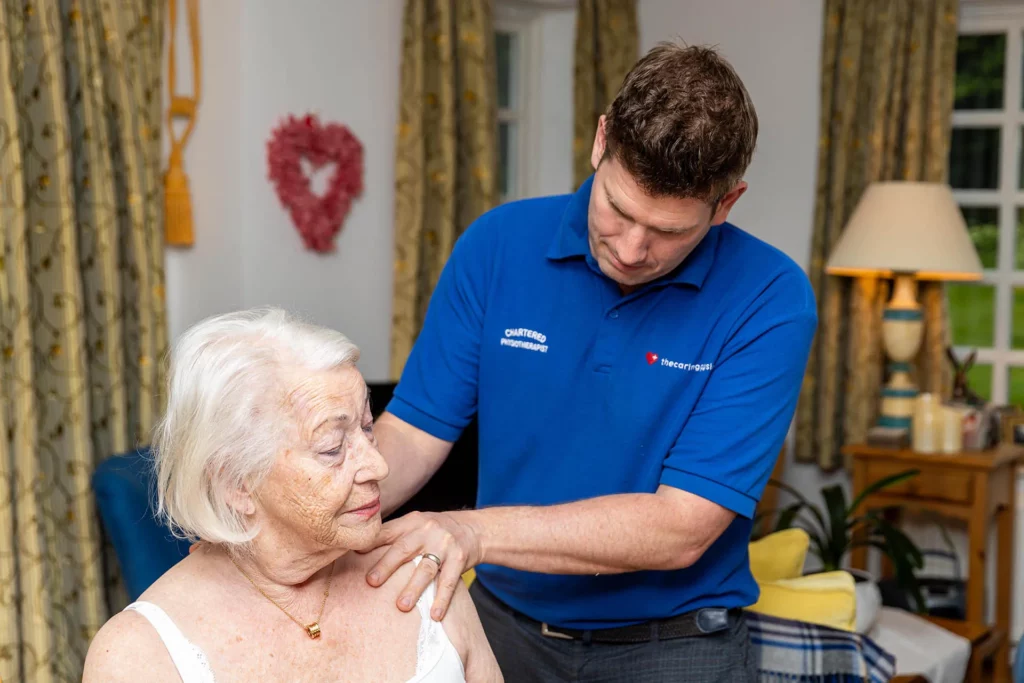
Self Funding Patients
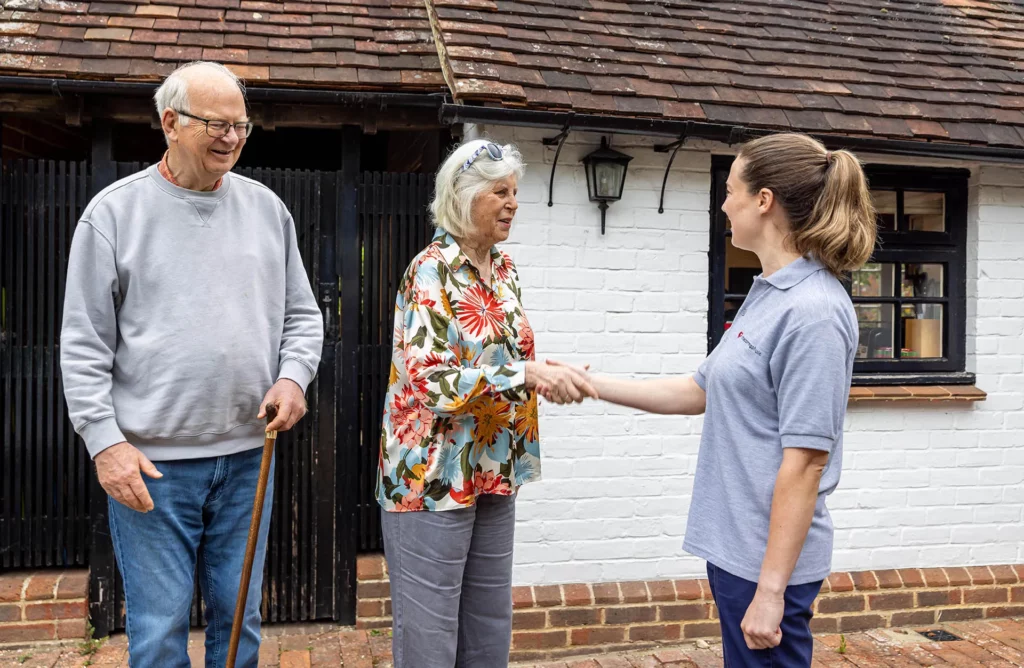
Respite Physiotherapy
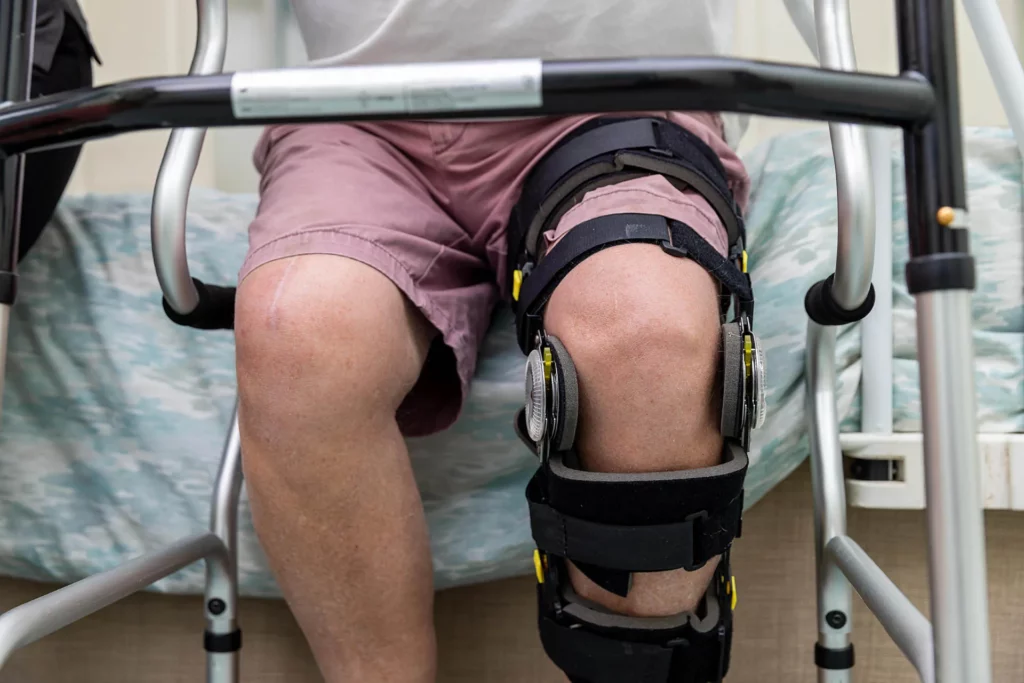
We can offer Respite Physiotherapy packages where we provide intensive physiotherapy in any care home in areas we cover. This is typically a short stay of around 6 weeks to help you recover from a fractured hip or other illness, with the intention of you returning home with greater independence.