
Home Visit Physiotherapy in Blyth
Get in touch today
If you have any questions or to see how we can help
Physiotherapy at home in Blyth and the surrounding villages
We provide home-visit physiotherapy across Blyth, Bedlington and the Seaton valley, so the practice happens in the rooms and on the steps that matter. Your physiotherapist is chartered and comes to your home or care home. Nobody needs a GP letter to start, and there is no queue of ours to wait in.
Not everyone who rings us has been in hospital. Often the call comes because somebody at home in Newsham, Cowpen or Bedlington Station is getting weaker month by month, has had two near-falls nobody mentioned, and will not hear of making a fuss. Others ring straight after a stay — walking to rebuild after a stroke, or strength to find again after a chest infection cost a fortnight in bed. Ring at the first stage rather than the second if you can. Somebody who has stopped moving much eats less, drinks less and picks things up more easily, and that is the sequence that ends with the GP called out and a bed on a ward. Getting in before that is the most useful thing we do.
Our services in Blyth include:
- Older people’s physiotherapy — falls, wobbly balance and the nerve to go out alone again.
- Dementia physiotherapy — exercises built into the day rather than a programme to remember.
- Post-operative rehabilitation — after a new hip or knee from Wansbeck General or Nuffield Health Newcastle Hospital, from the first walk round the house onwards.
- Neurological physiotherapy — rebuilding walking and transfers after a stroke, and steady work for Parkinson’s and MS.
- Respiratory physiotherapy — for COPD and breathlessness, including after a chest infection.
- Muscle and joint pain — arthritis, back pain and stiffness after a break, treated in the chair and on the stairs where it bothers you.
- Care home physiotherapy — for residents in homes across Blyth and Bedlington.
- Rehabilitation for case management clients — serious-injury and complex post-surgical rehabilitation, with regular updates to the case manager.
- Live-in rehabilitation care — support from a live-in carer who keeps the rehabilitation going between our visits.
Why families in Blyth come to us
Blyth is the largest town in Northumberland and most of the people we see here have lived in it all their lives, often in the same street as a daughter or a sister. What brings families to us is usually one specific loss rather than a general decline: the walk down to the market has stopped, or getting into a car for a hospital appointment now takes two people and half a morning. We are called most often after a fall, or when a time-limited spell of reablement has finished and there is still ground to make up.
- Chartered and HCPC registered, with CSP membership and insurance for visiting you at home.
- No referral to arrange: you, a relative or the care home can simply ring.
- Patient visits: nobody hurried, and nobody made to feel slow.
- We enjoy this work, and seeing someone manage their own front step again is why.
- We explain what we are doing and why, to you and to your relative, in plain words.
- We aim at the result that matters to you, not the one that ticks a box on a form.
A short questionnaire goes out before we arrive, so the background is already known and the time is spent with your relative. It is a proper assessment, and part of it is working out who else can help: a husband, a daughter, the carer who comes in each morning. One visit a week will not undo a fortnight of sitting in a hospital chair on its own. There is always room for some treatment and a first set of exercises — lighter than the visits that follow, but never just a chat.
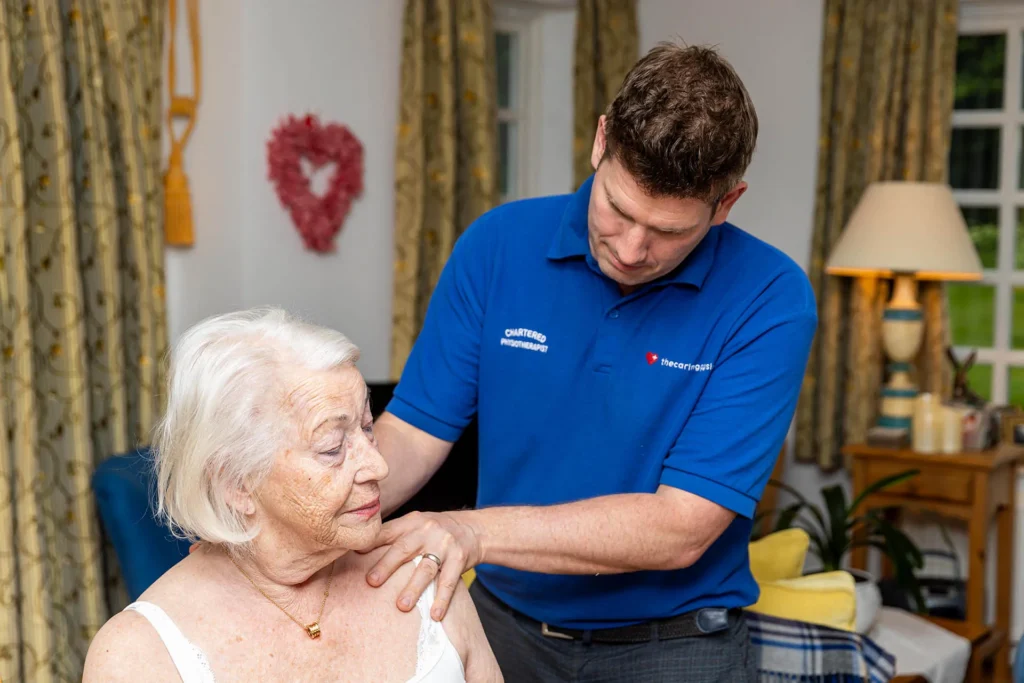
Blyth, Bedlington, Cramlington and the Seaton valley: where we go
Blyth and the seafront
- Blyth town centre
- Newsham
- Cowpen
- Bebside
- South Beach
- Kitty Brewster
Bedlington and the Wansbeck villages
- Bedlington
- Bedlington Station
- Guide Post
- Stakeford
- Choppington
- Scotland Gate
The Seaton valley
- Seaton Delaval
- Seaton Sluice
- New Hartley
- Holywell
- Hartley
Cramlington and around
- Cramlington
- Seghill
- Dudley
- Annitsford
- East Hartford
- Nelson Village
That covers most of NE24, NE22, NE23, NE25 and NE62. Pippa visits all of these as part of our Northumberland team. Nearer Whitley Bay, Killingworth or Wallsend? Give us a call and we will tell you plainly whether a regular visit is realistic.
What people in Blyth want back first
Cramlington and Blyth Community Hospital do the hospital part. What it cannot do is practise your kitchen. Most of the ground after a stroke, a fracture or an infection is made up in the weeks after the car pulls onto your own street, and it is made up on the particular things that have gone.
- Sleeping upstairs in your own bed again.
- Up out of your favourite chair on the first try, without someone pulling.
- Getting to the phone before it stops ringing, and standing long enough to finish the call.
- Into the car for a trip to see family, without two people and a cushion.
- Managing the walk down to the market, or as far as the bus stop.
- Less pain, so that moving stops being something to dread.
None of this is trivial. Every item on that list changes how much help a day takes, and we work with the family and with whoever is coming in so the gains do not slip back between visits. Where two carers are booked for every transfer, going down to one changes the cost of a week as much as it changes the feel of it.
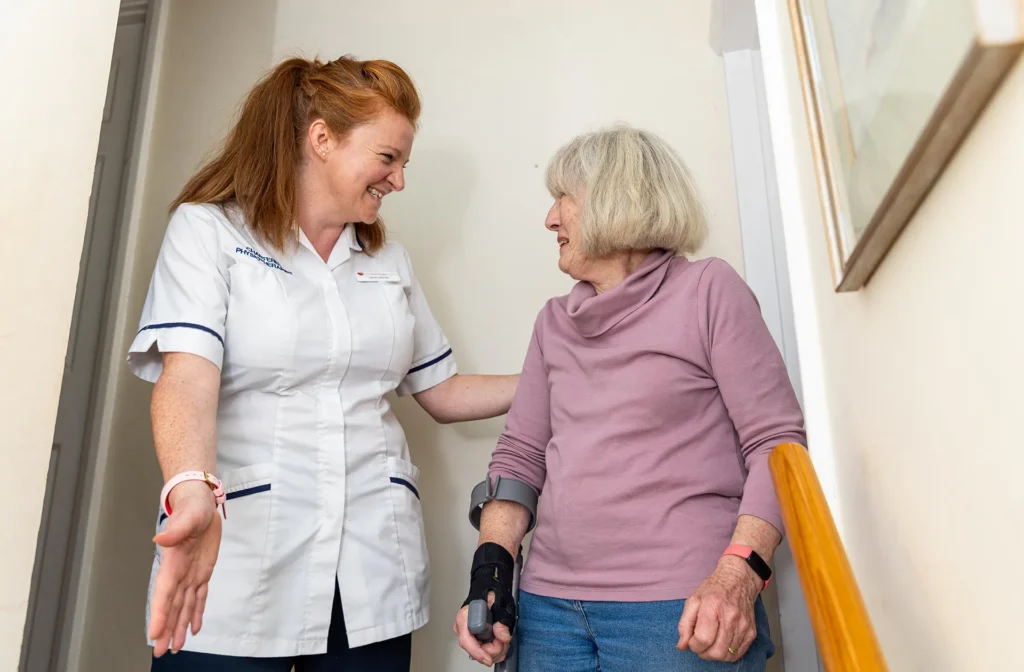
Blyth Community Hospital can get you steady on their corridor. It cannot get you steady on yours.
Blyth has both kinds of hospital inside eight miles. The specialist emergency care hospital at Cramlington takes the emergencies — its own emergency department, a critical care unit, full diagnostics and wards covering surgery, trauma, cardiology, respiratory, stroke and gastrointestinal care. In the town itself, Blyth Community Hospital has dedicated care for older people, a ward doing rehabilitation and discharge planning, outpatient clinics, x-ray and ultrasound and physiotherapy. What neither of them contains is your staircase, your bathroom and the step up to your own door. That last stretch is the part we do.
That is the gap we exist to close. Tell us the discharge date and we can usually start within one to five days, while the momentum from hospital is still there rather than weeks of lost ground to recover.
Up to 65% of older patients lose function during a hospital stay, and it can begin within hours.
That is the British Geriatrics Society’s deconditioning figure, and the “within hours” half is the useful one. It is the reason to ring while a discharge date is still being talked about rather than a fortnight after the car has pulled away from the door.
How we close the gap
As soon as you have a date
Ring us with the discharge date and we book the first visit around it.
Helped, not taken over
Out of kindness, families and carers often do things a person could still manage. We show everyone how to help in a way that rebuilds independence instead of quietly taking it over.
Your family, shown what to do
What happens between visits matters as much as the visit itself. We show whoever is there — a daughter, a husband, a neighbour — what helps, and what to leave alone.
Less help needed, not more
Every task you take back is one less job for a carer, and care packages often shrink as a result.
Your Blyth physiotherapist
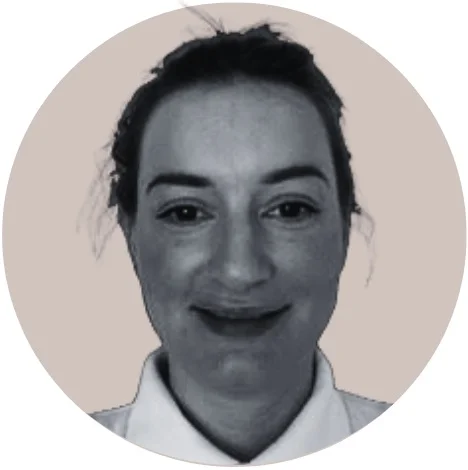
Your physiotherapist in Blyth is Pippa. Before joining us she worked on NHS stroke, orthopaedic and critical care wards, and she is a trained Pilates teacher, so exercise sits at the centre of how she works: practical, tailored and built around your goals at home.
Explore our physiotherapy services in Blyth
FAQ - Your local questions
My father is in the hospital at Cramlington. Do you talk to the ward before he comes home to Blyth?
Yes, if he is happy for us to. We speak to the ward’s discharge team and ask the nurses, therapists and occupational therapist what has been arranged for home: carers, equipment and any community physiotherapy. With that handover we book his first visit for the first few days after he gets back to Blyth, whether he comes home straight from Cramlington or via the rehabilitation ward at Blyth Community Hospital. If the community team has a wait, we start in the meantime and work alongside them once they arrive, so nobody is pulling in different directions.
Mum has been offered six weeks of reablement after her fall. Do we need to wait until it ends?
Reablement and what we do sit alongside each other rather than instead of each other, so there is usually no reason to wait. Reablement is time-limited by design — a defined set of goals inside a defined window — and it does a great deal of good within it. What families often find is that the weeks run out while there is still progress available, and that is exactly where we pick up. If the two overlap, we work with whoever else is coming in so nobody is pulling in different directions. Ring us with the end date and we will book around it.
How soon could someone actually come out? We have been waiting a while for everything else.
Most people get a first visit within one to five days of ringing. We have no waiting list of our own, and because the physiotherapist comes to you rather than you to a clinic, what decides the date is a diary rather than a queue. Pippa is in Blyth, Bedlington or the Seaton valley most weeks, so a first visit is rarely hard to fit in. You can ring us yourself; no GP or hospital referral is needed. Our main FAQ page sets out fees, insurance and payment.
My aunt has used a wheelchair for two years. Could she still learn to stand?
It might be, and it is worth a proper look. Two years is a long time, and the longer something has gone undone, the bigger it looks; that is normal and it does not mean nothing can change. If she was once told she would not stand again, that was a view of how things were then. Often what was missing was time to rebuild the strength and confidence that standing depends on. We would start with sitting balance and leg strength in her own chair, then look honestly at what is realistic, and tell you plainly what we find.
Can you show the care team what to do between your visits?
Yes, and it often makes the biggest difference of all. Where a care agency or a home is already coming in, we show the team the rehabilitation inside what they are doing anyway — a transfer, the walk through to the bathroom, standing at the sink — so it becomes part of the recovery rather than something separate bolted on afterwards. It costs very little extra time once someone has been shown. We leave it written down simply and we come back to it, because the exercises that hold are the ones that happen on the days we are not there.
My husband is forgetful. How will you support him to do the exercises?
We build the exercises into things he already does rather than setting a separate programme to remember. Rising from his chair, walking to the kitchen, the front step: the habit does the remembering for him. He sees the same physiotherapist wherever we can, so nothing starts from scratch, and we leave simple prompts where they are actually needed rather than a leaflet that goes in a drawer. We show whoever else is there too, family or the carer who comes in, so the repetition happens between visits. Memory loss changes the way we teach; it does not stop the exercises working.
My father used to walk along the front at South Beach most mornings and has not been since the spring. Nothing has happened yet. Is it too soon to ring?
Not too soon at all; this is the stage where physiotherapy does the most good. When a daily walk quietly stops, it is usually because balance, leg strength or confidence has started to go, and catching that before a fall is far easier than rebuilding afterwards. We would see him at home in Blyth, watch how he manages the stairs and the front step, and set a short daily routine aimed at getting him back down to the beach at South Beach. He can ring us himself, or you can for him, with no referral needed.
Local support in Blyth
Physiotherapy is only part of what helps. These Blyth and county services are worth knowing about.
Age UK Northumberland — information and advice, care at home, social groups, befriending and a Friendship Line for older people anywhere in the county, run from The Round House in Ashington.
Northumberland Memory Service — the NHS memory assessment service for the county, based at Ashmore House on Green Lane in Ashington on 01670 844 730, with home visits available for people who cannot easily get to a clinic.
Carers Northumberland — a charity for unpaid family carers, with advice on rights and entitlements, advocacy, and groups and events that cut down the isolation of caring.
Onecall, Northumberland County Council adult social care — for a care assessment, equipment or help at home, call 01670 536400 at any hour. Plenty of families use both council support and private physiotherapy.
Care homes in Blyth
Blyth and Bedlington have one of the denser clusters of care homes in the county, from national operators to small independent houses — Ridley Park on Forster Street, and Meadow Park and Chester Court on Choppington Road among them. The CQC register shows each home’s latest inspection rating, as the county council keeps no directory of its own. We see residents in all of these homes. We also visit homes in Cramlington.
Most families pay for it privately, either as a block of sessions after a fall or a spell at Cramlington, or as ongoing visits to keep someone on their feet. It adds to what the home already does, and we leave staff with simple ways to keep the exercises going. Find out more about physiotherapy in care homes.
Run a care home in Blyth or Bedlington? Get in touch about regular physiotherapy visits for your residents.
Blyth is the coastal corner of our Northumberland patch. Inland, there is home physiotherapy in Morpeth; further down the coast, home visit physiotherapy in Newcastle. The full list of towns we cover is here too.