
Home Visit Physiotherapy in Newbury
Get in touch today
If you have any questions or to see how we can help
Physiotherapy at home in Newbury and across West Berkshire
From the terraces off Northbrook Street to farmhouses beyond Lambourn, we visit people in their own homes across Newbury, Thatcham, Hungerford and the West Berkshire villages, and in local care homes. Nobody has to find a lift to a clinic, and we keep no waiting list.
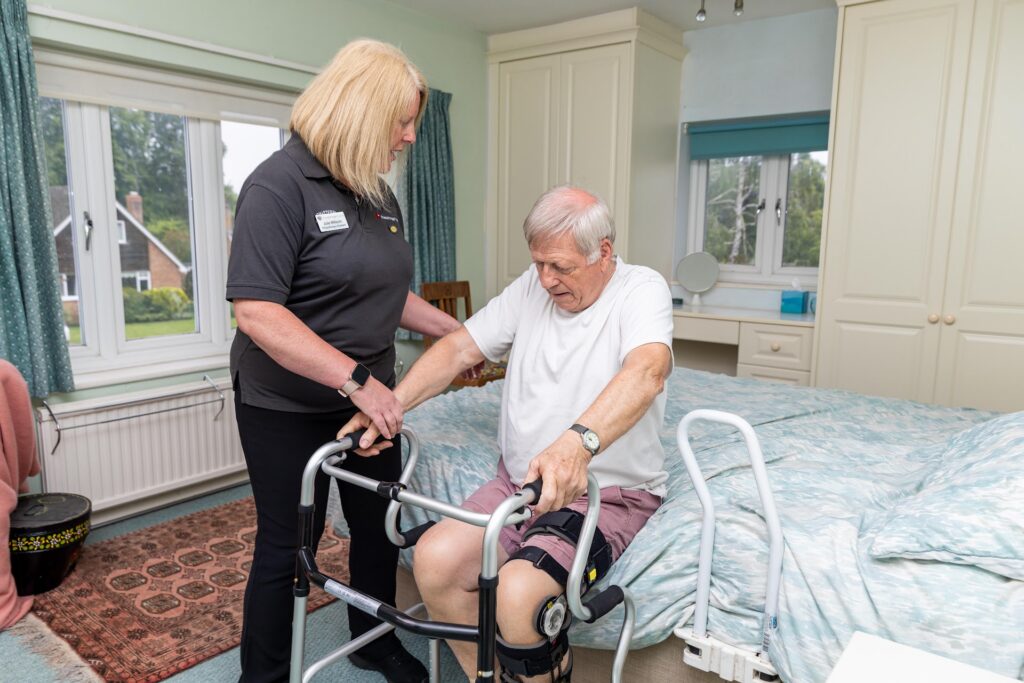
The calls we get tend to come at a moment of change. A daughter notices her mother in Wash Common now touches every chair on the way to the kitchen. A son’s father is back in Thatcham after a fall and a week in the Royal Berkshire, and will not leave the house. A wife rings because the stroke team has signed her husband off, and he is nowhere near done. Ringing early, before a second fall, gives us far more to work with.
What we help with in and around Newbury:
- Physiotherapy for older people: steadier walking, fewer falls, and the nerve to go out alone again.
- Neurological physiotherapy: stroke, Parkinson’s and MS, practised on the floors and stairs you use every day.
- Dementia physiotherapy: gentle, unhurried sessions in the rooms someone knows, so they keep walking and getting up from a chair safely.
- Rehabilitation after surgery: new hips and knees, whether done at the Royal Berkshire or privately.
- Breathing and chest physiotherapy: COPD and breathlessness, pacing the day so the stairs are manageable.
- Joint and muscle pain: arthritis, a stiff back, or a wrist or ankle slow to recover after a break.
- Physiotherapy in care homes: one-off referrals or a regular slot for residents in West Berkshire homes.
- Case-managed rehabilitation: complex injury rehab planned with the case manager, with hydrotherapy at the Diamond Centre when it helps.
- Live-in rehabilitation care: a carer living in who keeps the exercises going every day between physiotherapy visits.
Why West Berkshire families call us
West Berkshire is getting older. Nearly one in five of its 161,400 residents is over 65 (ONS, Census 2021), and the number of over-65s rose by a third between the 2011 and 2021 censuses. Many live in villages where the bus is infrequent and the nearest acute hospital, the Royal Berkshire in Reading, is a long drive. Physiotherapy at home takes the journey out of it.
- Every physiotherapist we send is chartered, registered with the HCPC, a member of the CSP and insured to treat you in your own home.
- Lambourn, Kintbury, Chieveley, Compton and the villages in between are part of our normal round, not a special journey.
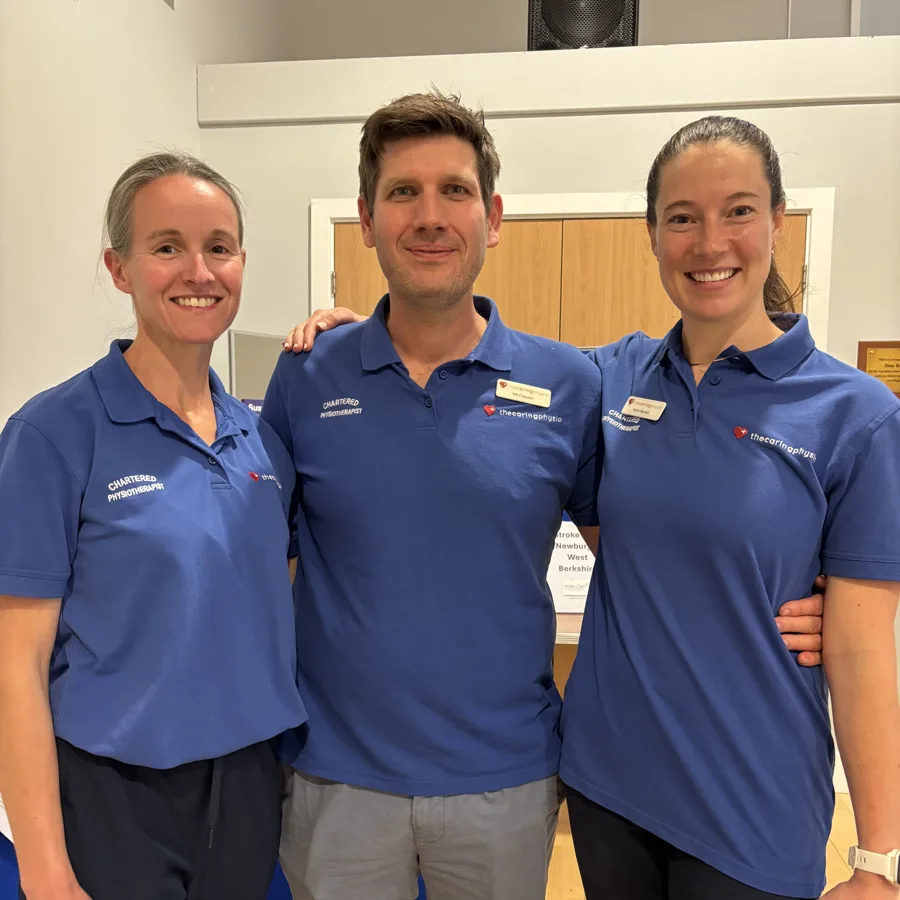
- Vicky, Nicole and Will cover for each other, so sessions carry on through holidays and sickness with someone who already knows your notes.
- Kindness first: we treat your home, your routines and your family with the same care we give the exercises.
- Your GP, carers and family kept up to date in plain English, and a straight answer if something is not working.
- Told it is too late after a stroke or a fall? We will take a fresh look and give you an honest answer.
Our first visit is an assessment that ends with treatment, not a list of things to do later. We watch how you manage your own stairs, chair and doorstep, and ask what you most want to do again, whether that is the walk to the Kennet and Avon towpath or simply making a cup of tea standing up. Often the barrier turns out to be fear of falling or pain nobody has sorted out. Between visits we agree what you, your family or carers can practise, so progress does not wait for us.
Stroke and neuro rehabilitation in West Berkshire
When NHS stroke rehabilitation ends, recovery does not have to. For many people, strength, balance and walking keep improving long after discharge, but only if someone keeps practising, week after week. Community groups are where much of that happens, and where people meet others who know exactly what they are going through.
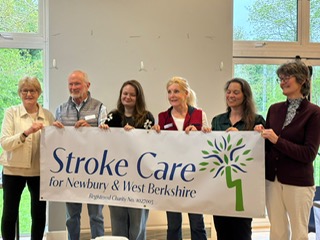
That is why we work with Stroke Care for Newbury and West Berkshire, a local charity (registered charity 1027003) supporting stroke survivors, their families and carers. Every Tuesday from 10am to 2.30pm its members meet at Woolhampton Village Hall for physiotherapy, exercise, activities that keep the mind working, lunch and good company. Members call it a lifeline, and the charity’s Family Support team helps families with information and practical support at home.
We are lucky to provide the physiotherapy. Vicky H., who led a neurology team at Chelsea and Westminster Hospital before joining us, is the group’s main physiotherapist. So that the sessions happen every single week, Nicole and Will step in whenever Vicky is away, and members always get their weekly physio. Each session includes:
- A circuit class where every exercise has a seated and a standing version.
- Four levels of difficulty, so everyone works at the right level and moves up as they get stronger.
- One-to-one time for members who need a closer look at their walking, balance, arm or hand.
- Exercises to carry on at home between Tuesdays.
Could the group help you or someone you care for? The charity welcomes new members and takes referrals from hospitals, GPs, carers and stroke survivors themselves. Call its Family Support team on 01635 529360 or email contactstrokecare@gmail.com. If you would like physiotherapy at home as well, Vicky and the team can visit you there too.
Neurological conditions we help with at home
- StrokeWalking, balance, arm and hand use, and getting back to everyday jobs around the house.
- Multiple sclerosis (MS)Managing fatigue, keeping strength and balance, and adapting the plan as needs change.
- Parkinson’sBigger, steadier steps, getting up from chairs and the floor, and fewer falls.
- Spinal cord injuryTransfers, posture, strengthening and staying as independent as possible at home.
- Traumatic brain injury (TBI)Rebuilding balance, walking and daily routines, step by step.
- Motor neurone disease (MND)Staying comfortable and moving for as long as possible, easing stiffness, and advice on equipment.
After a brain or spinal cord injury, we often work alongside a case manager and the wider rehabilitation team. Read about our rehabilitation for case management clients, or our neurological physiotherapy at home.
Where we visit around Newbury
Newbury town
- Newbury town centre
- Wash Common
- Speen
- Shaw
- Donnington
- Greenham
- Enborne
Thatcham and the east
- Thatcham
- Cold Ash
- Bucklebury
- Midgham
- Woolhampton
- Aldermaston
- Brimpton
Hungerford and the west
- Hungerford
- Kintbury
- Inkpen
- Lambourn
- East Garston
- Great Shefford
North of the town
- Chieveley
- Hermitage
- Curridge
- Boxford
- Compton
That covers RG14, RG18, RG19 and RG20, with RG17 around Hungerford and Lambourn and RG7 towards Woolhampton. Just outside these villages? Give us a call and we will check the map with you.
We also visit families in nearby Reading, Basingstoke, Wantage and Marlborough. See all the areas we cover.
What Newbury families say they want back
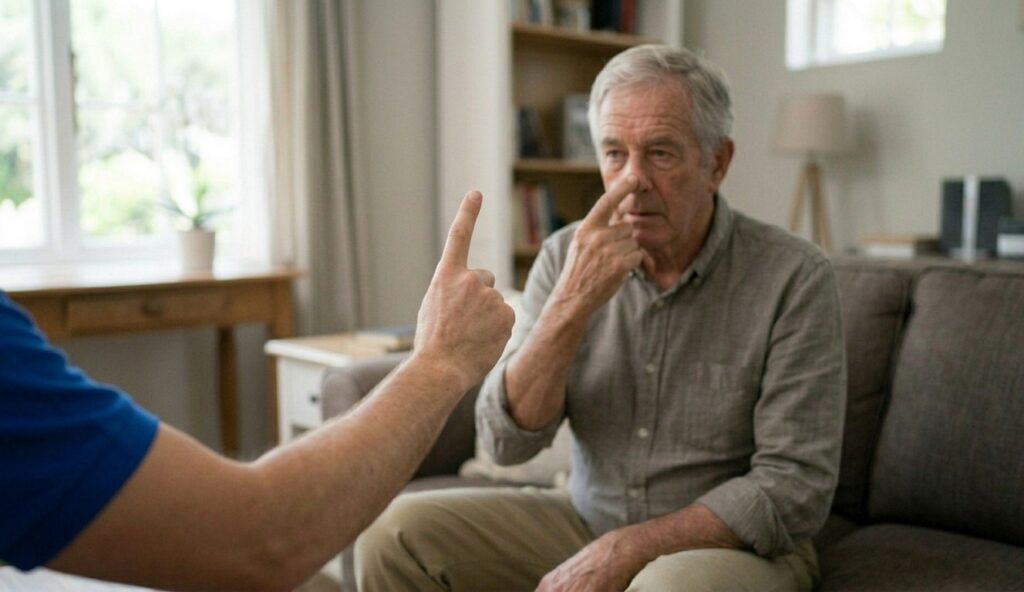
Ask anyone what they miss and it is rarely a muscle. It is getting into town on market day, a round at the golf club, feeding the ducks at Victoria Park, or being able to climb into a grandchild’s car without help. We work backwards from that goal: the distances, the kerbs, the car seat, the stairs at home. Strength and balance work is built around getting you there.
- Turning over in bed and sitting up on your own
- Getting up off the floor if you do go down, or knowing how to wait safely for help
- Carrying the shopping in from the car after a trip to Parkway
- Down on the rug with the grandchildren, and back up again without a hand
- A day out again: the canal at Hungerford, or tea and cake at a garden centre
- Being yourself again, rather than the person everyone is worried about
The Royal Berkshire and West Berkshire Community Hospital do the hospital part. Recovery happens at home.
An ambulance from Newbury or Hungerford usually heads for the Royal Berkshire Hospital in Reading. After a stroke, some go on to Highclere Ward, the Royal Berkshire’s neuro rehabilitation ward at West Berkshire Community Hospital in Thatcham. Older people who need longer to get back on their feet may move to Donnington Ward, the rehabilitation ward on the same site. Both hospitals do good work, but the 24-hour support stops when you leave hospital and return home, and that can feel daunting. We don’t want you sitting and waiting in between care calls. We can come to you and help rebuild the muscle and confidence you may have lost in hospital, or after an illness at home that kept you in bed and stopped your normal routine.
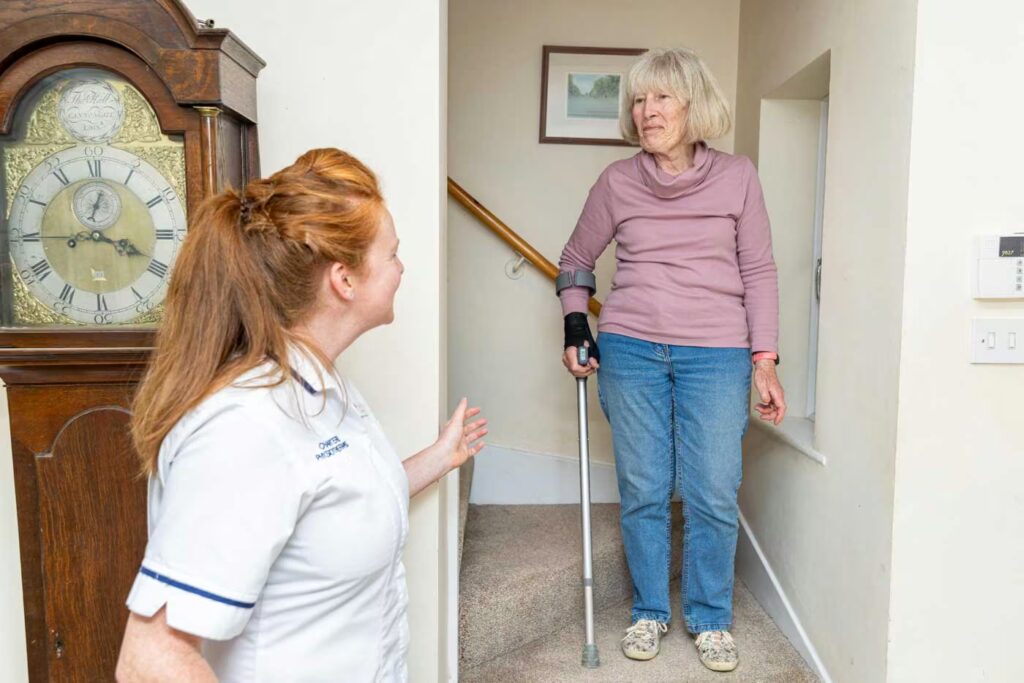
Days in bed add up
In one research study, healthy people in their sixties lost about 13% of the strength in their thigh muscles after just ten days of bed rest (Kortebein and colleagues, Journals of Gerontology, 2008). The loss can be won back. In a trial of hospital patients with an average age of 87, two short exercise sessions a day turned decline into improvement (Martínez-Velilla and colleagues, JAMA Internal Medicine, 2019). Starting at home in the first days back builds on that.
How we close the gap
Building up your confidence
Fear of falling often holds people back more than weakness does. We practise the moves that worry you most with a physiotherapist beside you, at your pace, until you trust your own legs again.
Reducing your pain
Pain stops people moving, and moving less tends to make pain worse. We help ease it by combining gentle movement for stiff joints with strengthening exercises and massage, so everyday movement gets easier.
Having fun
We want you to look forward to your physio sessions, not dread the exercises. We make the exercises and activities enjoyable, so every session brings you closer to doing the things you want to do again.
Restoring your dignity
We pair the exercises with daily tasks, like washing, dressing and using the shower and toilet on your own, so you rely less on carers doing them for you.
Not sure you are using your mobility equipment properly?
Don’t worry. We can assess the walking aids and adaptive equipment you already have, or may need, and check you have the right mobility aids, set up correctly, to help you stay independent at home.
We will talk you through your options: what may be available free from the NHS or the council, which usually starts with asking for an occupational therapy assessment, and what we would suggest buying privately, which can often be quicker.
Your Newbury physiotherapists
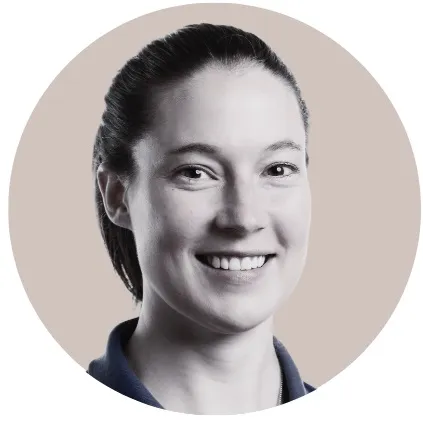
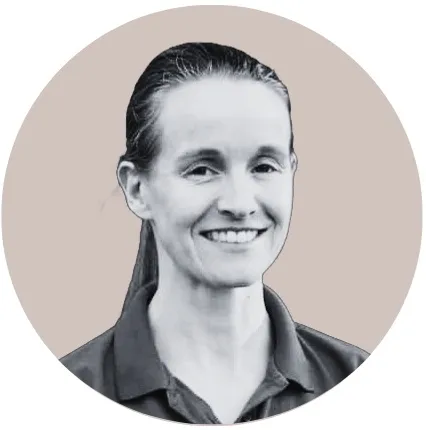
Vicky H. has nearly 20 years in NHS stroke and neurological rehabilitation. Every Tuesday she runs a circuit-style exercise class and one-to-one sessions with Stroke Care for Newbury and West Berkshire at Woolhampton Village Hall, with each exercise adapted so it can be done sitting or standing. She also visits people at home after a stroke or with Parkinson’s or MS.
Nicole S. visits older adults across Berkshire and Oxfordshire, with a focus on falls prevention and Parkinson’s. Between them they cover Newbury, Thatcham, Hungerford and the villages of West Berkshire.
What families say about Vicky and Nicole
“After a double hip replacement & latterly after a stroke, TCP attended my 85yo Mum in her Newbury care home. … Vicky translated that into post-assessment exercises & equipment use (during & between sessions) such that we were all super-satisfied by her progress.”
Minty, Newbury · rehabilitation after a stroke, in a care home, with Vicky
“They sent Vicky to spend time with me at home, advising me on exercises to strengthen my muscles and on posture while walking and even on how to use a walking stick. … I look forward to Vicky’s visits which provide me with a purpose, and her optimism and cheerful nature lift my spirits.”
Christopher C., Newbury · balance and walking with Vicky
“Nicole has enabled a very elderly gentleman to walk again after a hip replacement and has continued, on a long-term basis, with an exercise programme which is tailored to his needs … Nicole is always kind and understanding, enthusiastic and encouraging.”
Jacqueline J. · walking again after a hip replacement with Nicole
“Nicole treated me after my knee replacement and I made excellent progress due to her care.”
Pat B. · rehabilitation after a knee replacement with Nicole
From our Google reviews.
Helping you recover using physiotherapy in the comfort of your home
FAQ - Your local questions
I’m waiting for my mother to leave the Royal Berkshire and come home. Do you liaise with the ward team?
Yes, with your permission. We talk to the discharge team and, where needed, get a handover from the nurses, occupational therapist and physiotherapist about her care plan and any support arranged for home, such as carers or community physiotherapy. We then book her first visit for her first days back, so there is no gap between leaving the Royal Berkshire and starting at home. If there is a wait for community physiotherapy, we can fill the gap and work alongside it once it starts.
My father is gripping the bannister harder and taking the stairs one at a time. Is that the time to ring?
Yes, and it is a good moment to call: before a fall rather than after one. Holding the bannister harder and taking the stairs one at a time usually mean leg strength and balance are slipping, and both respond to the right exercise at any age. We would visit him at home, whether that is in Speen or out at Cold Ash, watch how he manages his own stairs and his favourite chair, and set exercises he can practise every day. He does not need to have seen a doctor first. The sooner we start, the more there is to build on.
My mother lives out towards Lambourn and I am in Hungerford. Is that too far for a home visit?
No, and it is worth saying plainly, because people talk themselves out of ringing on the assumption that they are too far out. Our physiotherapists travel across West Berkshire, including RG14, RG17, RG18, RG19, RG20 and RG7, from Hungerford and Lambourn to Thatcham and Woolhampton. Being a few miles from Newbury changes nothing about the visit itself: the same assessment, the same time taken, and the work done on her own stairs and her own path rather than in a clinic. If you live on the edge of that area, call us and we will say straight away whether we can get to you.
My husband has had a stroke and his NHS rehab has finished. Is it too late?
No. Recovery after a stroke can carry on for months and years with regular practice, and the end of a block of rehabilitation is not the end of what he can gain. We will see where he is now, set goals with you both and plan exercises around his day, so the practice happens between visits as well as during them. We will also be honest with you about what we think can change and what may not. Vicky also runs a weekly exercise class and one-to-one sessions with Stroke Care for Newbury and West Berkshire at Woolhampton Village Hall.
Can you work alongside hydrotherapy?
Yes. We have referred a number of clients to the hydrotherapy pool at the Diamond Centre in Newbury, and we plan the exercises we do at home around their pool sessions. Warm water takes some of the body’s weight, so many people can walk and move in the pool before they can manage the same on dry land. We then turn that into the steps, stairs and chair transfers at home, so the two work together rather than separately. If getting to the pool is the hard part, we can work on the car transfer first.
How quickly can you visit?
We usually see people within one to five days of the first call. Because we have no waiting list of our own, we can fit the first visit around family, carers and any hospital appointments, whether you are in Thatcham, Hungerford or one of the villages. If you are already waiting for NHS physiotherapy, you keep your place: we start in the meantime and work alongside it. Ring us with a discharge date if you have one, and we will plan the first visit around it.
Can the NHS provide physiotherapy at home instead?
Sometimes, for a limited time after leaving hospital, and your GP can refer you for NHS physiotherapy, though waits vary and it may be at a clinic. We run privately alongside the NHS, can start while you wait, and keep the NHS team in the picture if you would like. You do not need a GP letter to come to us: you, a relative, a case manager or a care home can ring us directly. Our fees are set out on our frequently asked questions page.
Local support in Newbury
Physiotherapy is one part of the picture. These local organisations can help with the rest, and the ones marked as partners are people we work with week by week.
Our local partners
Stroke Care for Newbury and West Berkshire — a local charity supporting stroke survivors, families and carers, with a rehabilitation group at Woolhampton Village Hall on Tuesdays, where our physiotherapist Vicky runs weekly sessions.
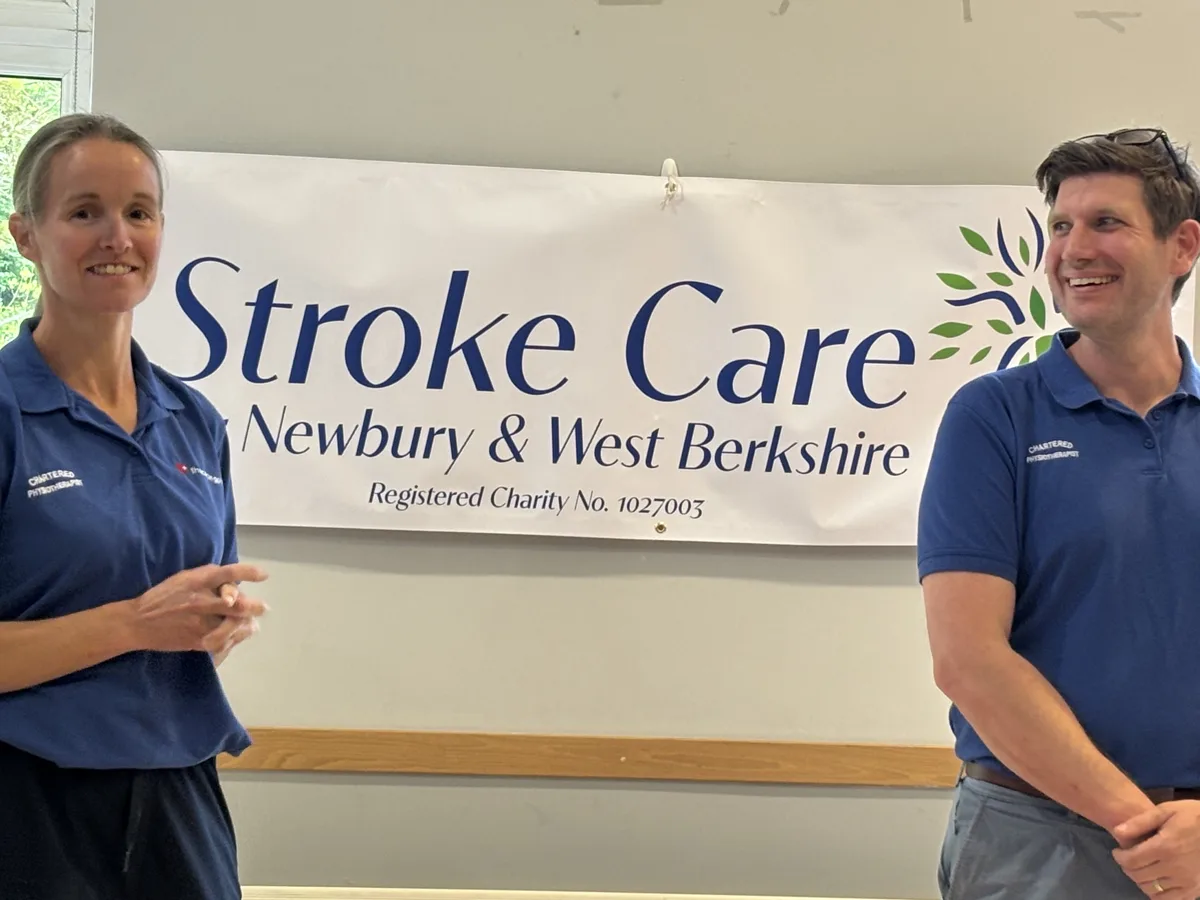
Vicky and Will at the Stroke Care AGM in April 2026
The Diamond Centre, Newbury — a day centre with a hydrotherapy pool, rehabilitation gym and stroke support. We refer clients there for hydrotherapy alongside their physiotherapy at home.
Other help
West Berkshire Council adult social care — the starting point for a care needs assessment or help at home; call 01635 503050.
Age UK Berkshire — advice on benefits, care costs and staying independent, for older people in Newbury and across the county.
Care homes in Newbury
Newbury and the villages around it have care homes of every size, from small independent houses to homes run by the national groups, among them Bupa’s Argyles on Pound Street and The Donnington on Wantage Road, Bayford House at Stockcross and Thatcham Court in Thatcham, and Care UK’s Newbury Grove and Winchcombe Place. We visit residents in homes large and small.
Most families arrange this privately, either a run of visits to rebuild strength after a setback or a regular session that keeps someone on their feet. We work alongside the home’s own team and show staff the exercises, so the progress carries on between our visits. Read more about physiotherapy for care home residents.
Care home managers in West Berkshire, get in touch to talk about regular visiting physiotherapy for your residents.