
Home Visit Physiotherapy in Kingston upon Thames
Get in touch today
If you have any questions or to see how we can help
Home physiotherapy across Kingston, from Coombe to Tolworth
We visit people at home across Kingston upon Thames: the town centre and Norbiton, up through Kingston Vale and Coombe, out to New Malden, and south through Surbiton, Berrylands and Tolworth. Our physiotherapist for Kingston comes from a hospital pain service, which makes this the first patch we cover with a physiotherapist from a pain background. If pain has been running the show for months — a back that has never settled, a knee replacement that still hurts more than it should, joints that have made every walk a calculation — that is exactly the work she is trained for, done at home and at a pace your body will accept.
We see everyone else too. Families usually ring at one of four moments. A mother in New Malden is slower on the stairs every month and will not hear of a doctor. A husband is coming home from Kingston Hospital after a fall, and the house suddenly looks like an obstacle course. A father in Surbiton has been in a respite bed for a fortnight that is turning into a month. Or someone is simply stuck in the same chair, and it is hard to watch. There is no dignity in being helped up from a chair you used to get out of yourself, and it does not have to stay that way. The right time to ring is before the fall, not after it.
Our services in Kingston upon Thames include:
- Muscle and joint pain — persistent back, neck and joint pain, worked on at home with pacing and a plan for flare-ups.
- Post-operative rehabilitation — after a hip or knee replacement at Kingston Hospital or privately at New Victoria Hospital.
- Older people’s physiotherapy — strength, balance and confidence after a fall or a hospital stay.
- Dementia physiotherapy — keeping walking and transfers going, at home or in a care home.
- Neurological physiotherapy — for stroke, Parkinson’s and MS, from colleagues in the wider team.
- Respiratory physiotherapy — for breathlessness and COPD.
- Care home physiotherapy — visits to residents across Kingston and Surbiton.
- Rehabilitation for case management clients — complex orthopaedic and post-trauma rehabilitation.
Why families in Kingston upon Thames come to us
Kingston is a borough of houses built for younger legs: Victorian and Edwardian terraces in Surbiton and Norbiton with a steep staircase and a turn at the top, 1930s semis in New Malden and Tolworth with the bathroom upstairs, and flats above the shops in the town centre with no lift. The river and the parks are on the doorstep, and for a lot of people the goal is simply getting back to them. That is where we work.
- Chartered physiotherapists, HCPC registered and CSP members.
- No waiting list of our own. If you are already waiting for NHS physiotherapy, we can start in the meantime and work alongside it.
- Problem-solvers first: if the usual approach will not work in your house, we find one that does.
- We work on what the pain has stopped you doing, at a pace your body will accept, rather than waiting for it to go first.
- We explain what we are doing and why, to you as well as to your relative.
- We do not write people off. If you have been told something is not possible, we will look again and be honest either way.
Before anyone arrives, the office sends a short form so the history, the medicines and any recent hospital stays are already known. That leaves the first hour for what matters: finding out what is actually stopping you, which is as often confidence or pain as it is strength, starting some of the work there and then, and agreeing a plan that the people around you can help with on the days we are not there.
Your South West London physiotherapist
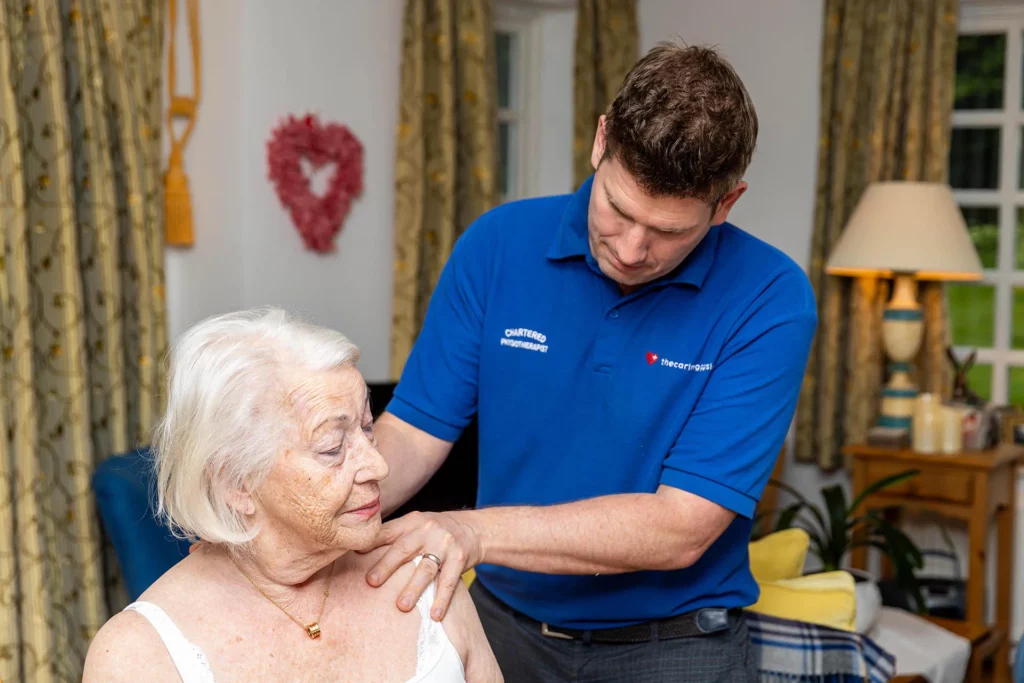
Your physiotherapist for Kingston and the surrounding area is a chartered physiotherapist whose background is in musculoskeletal and pain work, most recently in a hospital pain service. Persistent pain, post-operative recovery and the long tail of an injury are familiar ground, and so is the part of pain that is about worry rather than tissue. She covers Kingston, Twickenham, Richmond and Teddington, and the wider Caring Physio team covers neurological rehabilitation across south west London.

Areas we cover in and around Kingston upon Thames
Kingston and the north
- Kingston town centre
- Norbiton
- Kingston Hill
- Kingston Vale
- Coombe
East towards New Malden
- New Malden
- Berrylands
South through Surbiton
- Surbiton
- Tolworth
- Long Ditton
That takes in KT1, KT2, KT3, KT5 and KT6. If you are near the edges — towards Esher, Worcester Park or Wimbledon — ring and ask; our Wimbledon page covers the patch to the east.

What people in Kingston upon Thames want back
Ask someone what they want from physiotherapy and they rarely say better posture. They name something ordinary that the pain or the weakness has taken:
- Walking from room to room without reaching for the furniture
- Turning over in bed and sitting up on your own, without the pain waking you first
- Carrying the shopping from the car to the kitchen in one go
- Along the river from Kingston Bridge to Canbury Gardens, and a sit down because you want to, not because you have to
- Getting down on the floor to play with the grandchildren, and back up again
- Pain that no longer decides the day for you
We write the goal down at the first visit and check it against what has changed, so progress is something you can see rather than take on trust.
Kingston Hospital can mend the break. It cannot practise your stairs with you.
For most people here an emergency or an operation means Kingston Hospital on Galsworthy Road. Older patients are looked after on wards such as Derwent, a dementia-friendly ward on level 5 of the Esher Wing, and Cambridge Ward on level 7, where people are treated for a range of injuries and conditions. Keats Ward is the hospital’s 20-bed acute stroke unit; most people who have a stroke are first treated at a hyperacute unit, usually St George’s or Charing Cross, and then come back to Keats. St George’s in Tooting is also the major trauma centre for south west London and Surrey. Planned hip and knee replacements are often done privately at New Victoria Hospital on Coombe Lane West.
Getting home is the end of the hospital’s job. It is the beginning of the recovery. When someone has spent weeks on a ward, the ward routine becomes the familiar one, and the house — the stairs, the bath, the step at the front door — is the unfamiliar place. That is the part we work on.
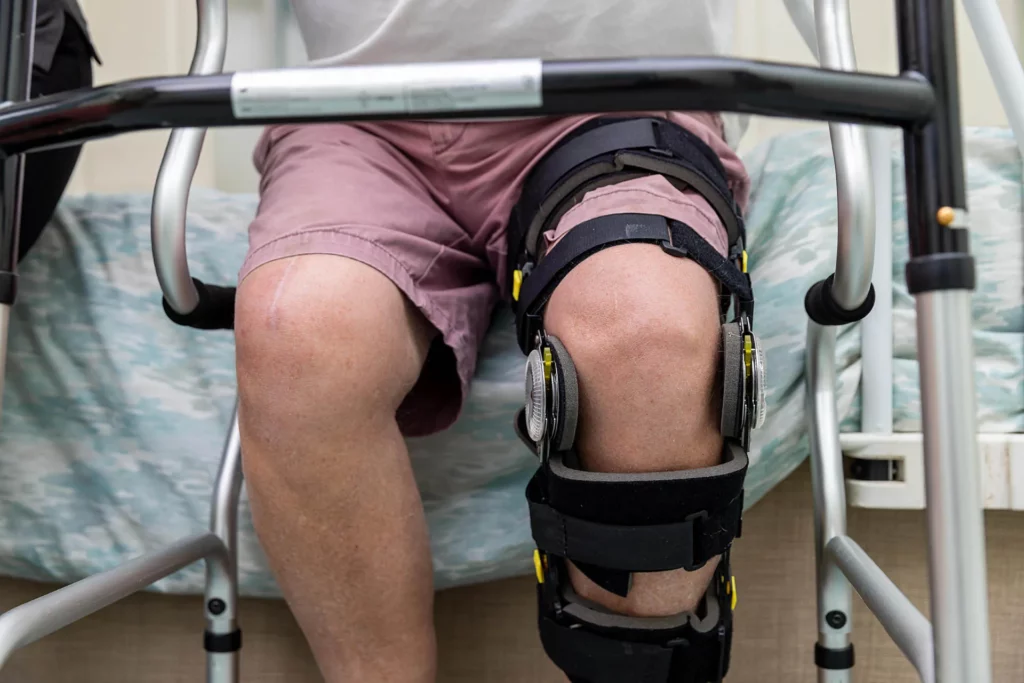
Chronic pain may affect between one-third and one-half of people in the UK.
For most of them the answer is not rest. Paced, gradual activity, built around what the person wants to be able to do again, is how pain services work, and it is how we work at home.
NICE — Chronic pain (primary and secondary), guideline NG193
How we close the gap
As soon as you have a date
Ring us with the discharge date, or ring before there is one. We book the first visit around it.
Worked at the level that helps
Hard enough to make a difference, not so hard it sets you back. With pain especially, getting that judgement right is most of the job.
Time to do it properly
We are not counting the minutes. A session lasts as long as the work needs, and the plan moves at your pace rather than a rota’s.
Back along the river
Kingston Bridge, the riverside, Canbury Gardens: flat, close and worth the walk. For a lot of people here that is the goal, and we work towards it a stretch at a time.
Helping you recover using physiotherapy in the comfort of your home
FAQ - Your local questions
My mother is on Cambridge Ward at Kingston Hospital after an operation on her hip. Can you see her before she comes home?
Yes, and ringing now is the right time. We can talk to you while she is still on Cambridge Ward, find out what the team at Kingston Hospital expect her to manage when she leaves, and book the first visit for the day or two after she gets home. That visit is about the things a ward cannot rehearse: her own stairs, her own bathroom and her own front step. If the borough’s free reablement service is involved, we work alongside it rather than instead of it; reablement is short and focused on daily tasks, and the physiotherapy carries on from where it stops.
My father's back pain has gone on for years. Is it worth trying physiotherapy now?
Yes. Pain that has gone on for years is common, and it is not a sign that nothing can change. Our physiotherapist for Kingston comes from a hospital pain service, and the approach is the same one: work out what the pain has stopped him doing, then build back towards it at a pace his body will accept, with a plan for the days it flares. The NHS pain clinic at Teddington takes referrals from GPs only, so if he is waiting for that, or has been through it, we can start now and work alongside it. Our fees are on our FAQ page.
We can see my aunt in New Malden getting frailer. Nothing has happened yet. Is it too soon to ring?
No, it is a good time. Getting slower on the stairs, holding the furniture, giving up the walk to the shops: those are the signs before a fall, and strength and balance work at that stage is what reduces falls. We would see her at home in New Malden, find out what is actually holding her back, which is often confidence as much as strength, and give her a programme she can do between visits. If she is reluctant, we are used to that; a first visit can simply be a conversation, and nothing has to be agreed on the day.
My husband did not get on with physiotherapy before and does not want to try again. Is it worth a visit?
Often, yes. A bad experience usually means the exercises did not fit his life, the pace was wrong for his pain, or nobody explained why any of it mattered. We start somewhere else: with what he wants to be able to do again, whether that is the walk along the river at Kingston or getting back to the shops in Surbiton. If we cannot find something worth working on, we will say so honestly after the first visit, and there is no block booking to get out of. Most people find that the second experience is very different from the first.
My grandmother lives in a Victorian terrace in Surbiton with a steep, narrow staircase that turns at the top. Can you help with stairs like that?
Yes. Stairs like that are exactly why we visit at home rather than in a clinic. A practice step in a hospital gym is wide, straight and has a rail on both sides; a Surbiton or Norbiton terrace often has none of that. We work on her own staircase: where she grips, how she turns at the top, how she comes down, which is usually the harder direction, and whether a second rail would help. Where equipment would make a real difference, we can advise on what to ask Kingston Council’s adult social care team for.
I live a long way from my wife's family in Kingston and cannot be there for the visits. How will I know how her mother is getting on?
You will hear from us. After the first visit in Kingston we send a short update on what we found and what we are working on, and we keep you in the loop as things change, by phone or email, whichever suits you. If she has carers, we tell them what helps and what to leave alone, so the work carries on between visits. If something is not working, we say so plainly rather than letting visits drift. Plenty of the families we work with are coordinating from a distance, and it works well with a little planning.
My mother-in-law is in a care home in Kingston and they say they already do physiotherapy. How is this different?
Usually it adds to it rather than replacing it. Many homes have physiotherapy available but limited time for each resident, so it tends to go to whoever is most urgent. We come for a block of visits with one person’s goals in mind, for example walking to the dining room again after a spell in Kingston Hospital, and we show the staff what to carry on with between our visits so the progress holds. It is arranged privately by the family, and we work with the home’s team rather than around them.
Local support in Kingston upon Thames
As well as physiotherapy, families often need to know what else is out there. These are local organisations we point people towards.
Staywell — Kingston’s charity for older people: day centres in Kingston and New Malden, dementia support, exercise, befriending and help at home. There is no Age UK in Kingston, and Age UK London points people to Staywell.
Kingston Carers’ Network — information, advice and support for unpaid carers across the borough. 020 3031 2757.
Kingston Council adult social care — assessments, equipment and the free short-term reablement service. 020 8547 5000.
Pain services, Kingston and Richmond NHS Foundation Trust — the NHS chronic pain clinic at Teddington; referral is through your GP.
Care homes in Kingston upon Thames
Kingston, Surbiton and New Malden have a mix of residential and nursing homes, from small family-run houses to larger purpose-built homes.
Most of this work is arranged and paid for privately by families — a block of visits after a fall or a hospital stay, or ongoing work to keep someone moving. It sits alongside whatever the home already provides, and we work with their staff so the exercises carry on between our visits. You can read more about additional physiotherapy for residents.
Care home managers in Kingston upon Thames — get in touch to discuss regular visiting physiotherapy for your residents.
Nearby
We also visit Wimbledon, and in central London Chelsea, Kensington, Mayfair and Westminster. In south west London we also visit Twickenham, Richmond and Teddington. Call 0800 772 0542 or email office@thecaringphysio.co.uk.